
Premier League Betting Guide: Markets, Odds and Strategies
 Available in US
The Premier League attracts more betting volume than any other football competition worldwide. The combination of global broadcast reach, competitive depth, and extensive data availability creates a market that’s both heavily analysed and genuinely liquid. Every major bookmaker offers hundreds of markets per match, from standard match winner to exotic player propositions. This depth creates opportunities but also challenges — Premier League markets are among the most efficient in football betting, with bookmakers dedicating substantial resources to pricing accuracy. Finding genuine edge requires going beyond surface-level analysis.
The league’s structure — 20 teams playing 38 matches each through August to May, with three relegated and Champions League qualification for the top four — shapes betting approaches throughout the season. Early-season volatility (new signings bedding in, fitness varying, managers experimenting) gives way to clearer form patterns by autumn. The congested December schedule tests squad depth. Spring relegation battles and top-four races create pressure-driven matches with distinct characteristics. Understanding these seasonal rhythms improves bet timing and selection.
Premier League Market Coverage
Bookmaker coverage of Premier League matches is comprehensive, typically offering 200+ markets per fixture — substantially more than most European leagues receive.
Match winner (1X2) remains the most popular market despite three outcomes making value harder to find than two-way markets. Home advantage in the Premier League has diminished over recent years, with home win rates falling below 45% and away wins rising correspondingly. This shift makes traditional “back the home team” approaches less reliable.
Asian Handicap markets offer tighter margins than 1X2, typically 2-3% versus 4-5%. The Premier League’s competitive nature means handicaps are frequently tight — even top-six matches against bottom-half opponents rarely see handicaps beyond -1.5. Quarter-line handicaps (like -0.75 or +1.25) provide granular positioning options.
Over/Under goals centres on the 2.5 line, which splits roughly 50/50 across Premier League seasons (historically 52-55% over). The league averages approximately 2.7-2.9 goals per match, making 2.5 the natural pivot point. Alternative lines (1.5, 3.5) offer different risk/reward profiles for specific match assessments.
Both Teams to Score (BTTS) hits approximately 50-53% in the Premier League, among the highest rates in Europe. The league’s attacking philosophies and relatively open football produce BTTS-friendly environments. Certain fixture types (relegation battles, derby matches) historically produce lower BTTS rates as stakes increase caution.
Correct Score markets exist but carry high margins (often 20%+) that make consistent profitability challenging. The most common Premier League scorelines are 1-1, 1-0, and 2-1, each occurring roughly 10-12% of the time. The top ten scorelines account for approximately 70% of all matches.
Player markets include goalscorer betting (first, anytime, last), shots, cards, and various statistical propositions. Premier League player data is comprehensive, enabling sophisticated analysis of who genuinely offers value versus market pricing.
Outright markets cover season-long outcomes: league winner, top-four finish, relegation, top goalscorer, and various positional finishes. These markets become increasingly interesting as the season progresses and probabilities crystallise.
Understanding Premier League Odds Dynamics
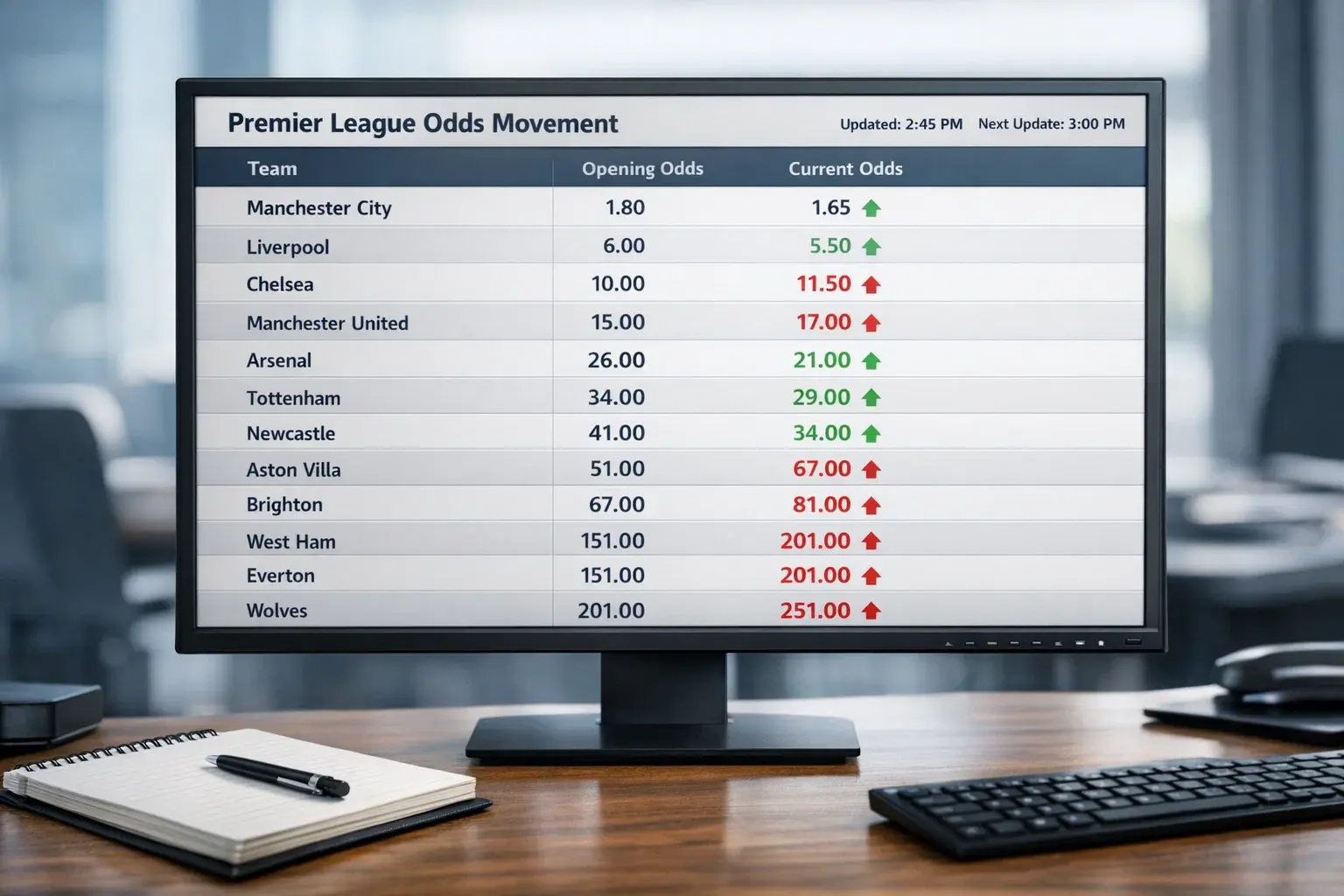
Premier League odds move based on multiple information sources, creating both opportunities and traps for bettors.
Early week opening typically occurs on Sunday or Monday for the following weekend’s matches. Opening odds reflect bookmaker models but often shift substantially before kick-off as money flows and information emerges.
Team news impact is significant in Premier League betting. A confirmed injury to a key player (particularly elite attackers or commanding defenders) moves odds notably. Smart bettors monitor press conferences (usually Thursday/Friday for weekend matches) and act before odds fully adjust.
Market money flow shapes odds throughout the week. Large recreational volumes on popular teams (Manchester United, Liverpool, Arsenal) can shorten their odds beyond fair value, creating potential value on opponents. Conversely, unfancied teams might drift to attractive prices if public money ignores them.
Late Saturday/Sunday markets for Monday Night Football often show different efficiency patterns. With Sunday results influencing sentiment and less time for thorough analysis, Monday matches occasionally offer value that earlier kickoffs don’t.
International breaks disrupt form and create uncertainty. Post-break matches (typically mid-September, mid-October, mid-November, late March) show increased variance as players return from varying travel and playing loads. Some bettors avoid these weekends; others specifically target them.
League-Specific Patterns and Trends
The Premier League exhibits characteristics that inform betting approaches.
Goal distribution skews toward second halves. Approximately 53-55% of Premier League goals arrive after half-time, rising further in final 15-minute periods. Teams trailing chase games aggressively; fatigue opens defences. Late goals markets and second-half-specific betting reflect this pattern.
Home advantage has weakened significantly since 2020. Empty stadiums during Covid accelerated this trend, but it hasn’t fully reversed. Home win rates that once approached 50% now sit around 42-44%. Away teams win nearly as often. Adjusting historical home-bias assumptions is essential.
Big-six matches produce fewer goals than expected. When top teams meet each other, tactical caution often prevails. These fixtures historically produce under 2.5 goals more frequently than league averages, and BTTS rates drop below 50%. The “attacking Premier League” reputation doesn’t hold for elite-versus-elite encounters.
Promoted teams face a steep learning curve. First-half seasons typically see promoted clubs struggle against established Premier League quality. However, statistical regression means poor early results often precede improvement as teams adjust. Backing promoted teams mid-season (rather than early) sometimes offers value.
Relegation battles in April and May create unpredictable outcomes. Teams fighting survival often exceed expectations against better opponents (the “six-pointer” effect), while teams with nothing to play for show variable commitment. Form analysis during this period requires contextual understanding beyond simple results.
Strategies for Premier League Betting
Several approaches suit Premier League characteristics.
Value identification through expected goals (xG) works well given comprehensive data availability. Teams outperforming xG are candidates for regression-based “against” betting; teams underperforming are candidates for backing. Premier League xG data is readily available from multiple providers.
Asian Handicap focus exploits tighter margins than 1X2. For confident selections, handicap betting delivers better expected value than match winner markets. Learning to identify appropriate handicap lines for different match types is a worthwhile skill.
In-play specialisation suits the Premier League’s high liquidity and broadcast availability. Live betting on goal markets (next goal, match goals) allows reaction to observed match flow. However, Premier League in-play markets are efficient — bookmakers invest heavily in live pricing.
Goals markets often present clearer value than match outcomes. Predicting whether a match will be high or low-scoring is sometimes easier than predicting who wins. Focus on total goals (over/under various lines) and BTTS when match winner feels uncertain.
Outright betting timing matters for season-long markets. Pre-season prices on title/top-four are based on assumptions that quickly prove wrong. Waiting until 10-15 matches clarifies reality, though prices adjust. Conversely, relegation markets often offer value early before promoted teams’ struggles become obvious.
Common Premier League Betting Mistakes
Overreacting to single results ignores underlying performance. A team that loses 1-0 despite dominating xG hasn’t suddenly become bad. A team that wins 1-0 from their only shot hasn’t suddenly become good. Look beyond scorelines to chance creation and concession.
Ignoring fixture congestion affects results significantly. Teams with Thursday Europa League games face tougher Sunday Premier League challenges than fully-rested opponents. Cup runs compound this effect. Squad depth matters more during December’s packed schedule.
Backing “big” names automatically assumes reputation equals performance. Manchester United’s historical dominance doesn’t predict current results. Arsenal’s squad quality must convert to actual performances. Base assessments on current-season data rather than historical prestige.
Neglecting squad rotation surprises bettors who don’t monitor team news. Top managers rotate heavily during fixture-dense periods. A “full strength” assumption when key players actually rest undermines selection logic.
Chasing accumulator losses with larger Premier League accas compounds problems. The league’s competitive unpredictability makes accumulators particularly risky. Even heavy favourites (1.30 odds) lose often enough to destroy multi-selection bets.
Bookmaker Selection for Premier League
Virtually all bookmakers cover the Premier League extensively, but differences matter.
Odds competitiveness varies by bookmaker and market. Sharp bookmakers (Pinnacle, Asian books) offer better prices but may limit winners. Recreational bookmakers offer promotions but often have worse underlying odds. Comparing prices across multiple accounts captures value.
Market depth differs on exotic propositions. Some bookmakers offer extensive player prop markets; others focus on core match markets only. If you specialise in specific market types, ensure your bookmakers cover them adequately.
In-play liquidity varies between bookmakers and betting exchanges. For live betting, ensure your chosen platforms can handle the stakes you want to place without delays or limitations.
Promotional value accumulates through accumulator bonuses, enhanced odds, and free bet offers. Premier League matches frequently feature in promotional campaigns. Monitoring offers across multiple bookmakers maximises promotional returns.
Seasonal Timing Considerations
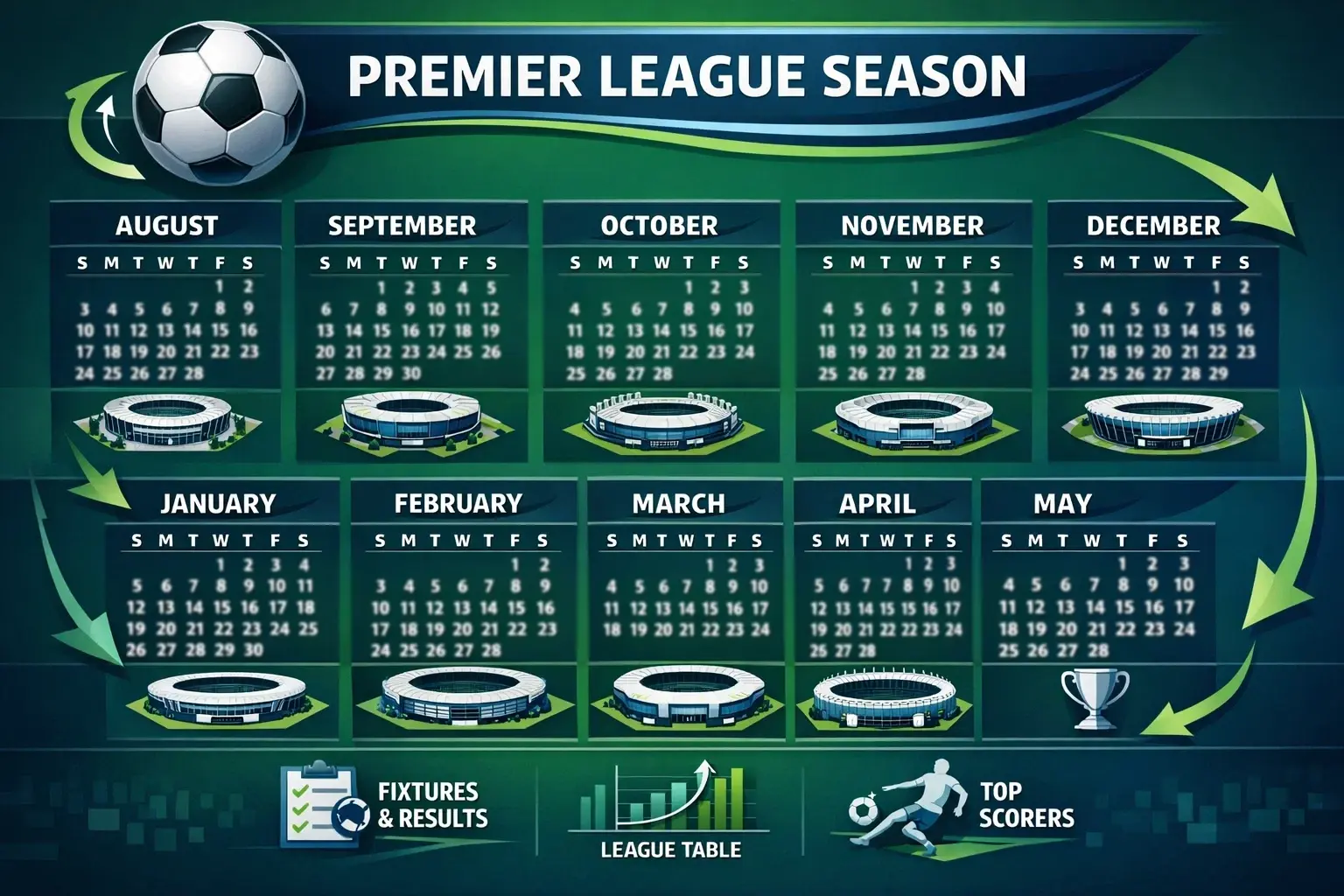
Premier League betting opportunities vary throughout the season’s different phases.
August-September features high uncertainty. New signings haven’t integrated; managers experiment with formations; fitness levels vary from pre-season schedules. Historical data becomes less predictive when squads change significantly. Some bettors avoid early-season betting; others target inflated odds on teams the market underestimates post-transfer activity.
October-December typically provides the most reliable form indicators. Teams settle into patterns; squad roles clarify; manager approaches become predictable. This period often offers the clearest value opportunities before the chaotic Christmas schedule disrupts routines.
December-January tests squad depth severely. Teams playing Thursday European matches before Sunday Premier League fixtures face genuine disadvantages. The Christmas fixture pile-up exhausts thin squads while deep squads maintain quality. Analysing squad depth and rotation patterns creates edges during this congested period.
February-May brings differentiated motivation. Title challengers, top-four chasers, and relegation battlers approach matches with varying intensity. Mid-table teams with nothing to play for show inconsistent commitment. Understanding what each team genuinely needs — and how much they need it — informs betting during the decisive season phase.
Data Resources for Premier League Betting
The Premier League’s data ecosystem supports sophisticated analysis.
Official sources (premierleague.com) provide basic statistics. Match reports, player stats, and historical results are freely available but represent only baseline information.
Advanced analytics platforms (FBref, Understat, StatsBomb) offer expected goals, progressive passing, pressing statistics, and other metrics that reveal true performance beyond results. Integrating these into analysis separates sophisticated bettors from those relying on surface-level data.
Injury and team news sources require monitoring. Official club channels, reliable journalists (each club has trusted reporters), and press conference transcripts provide team news that moves markets.
Odds tracking services (Oddschecker, OddsPortal) enable price comparison across bookmakers. Capturing best available odds compounds value over hundreds of bets.
The Premier League provides football betting’s deepest market, combining exceptional data availability with global liquidity. This creates genuinely efficient markets where edge is hard-won but opportunities exist for disciplined bettors who understand league-specific patterns, leverage available data, and manage the inherent unpredictability that makes the competition so entertaining to watch.
