
Bundesliga Betting Tips: High-Scoring German Football Guide
 Available in US
The Bundesliga stands apart from Europe’s other major leagues through its commitment to attacking, high-tempo football. German football philosophy emphasises pressing, transitions, and goals — lots of goals. While other leagues have trended toward defensive pragmatism, the Bundesliga consistently produces the highest goals-per-match average among Europe’s top five divisions. For bettors, this creates a distinctive market environment where goals-related betting offers statistical advantages unavailable elsewhere, though the league’s unique characteristics require specific strategic adjustments.
Beyond the entertainment value, the Bundesliga offers genuine betting opportunities. Bayern Munich’s dominance creates predictable patterns at the top; promoted teams and relegation candidates produce volatile matches at the bottom; and the competitive mid-table generates genuine uncertainty that bookmakers struggle to price accurately. Understanding these dynamics — and how they differ from Premier League or La Liga betting — enables more informed German football wagering.
Bundesliga Statistical Profile
The numbers confirm the Bundesliga’s high-scoring reputation.
Goals per match consistently averages 3.0-3.2 across recent seasons, significantly above the Premier League (2.7-2.9) and La Liga (2.5-2.7). This isn’t statistical noise — it reflects genuine tactical and cultural differences in German football’s approach to the game.
Over 2.5 goals lands in approximately 58-62% of Bundesliga matches, compared to 52-55% in the Premier League. This represents substantial edge potential when bookmakers price over 2.5 similarly across leagues without fully accounting for the Bundesliga’s higher baseline.
Over 3.5 goals hits around 38-42% of the time — remarkably high for what’s typically considered a “risky” line. In certain fixture types (Bayern Munich matches, attacking mid-table clashes), this percentage rises further.
Both Teams to Score occurs in approximately 55-61% of Bundesliga matches, the highest rate among major European leagues. German teams’ attacking mentality means even relegation candidates regularly find the net, while pressing-heavy approaches create defensive vulnerabilities across the division.
Home advantage remains significant in German football, with home teams winning approximately 44-46% of matches. The Bundesliga’s famous fan culture — featuring the world’s highest average attendances — creates genuinely intimidating atmospheres. Signal Iduna Park (Dortmund) and Allianz Arena (Bayern) exemplify environments where away teams struggle.
Why the Bundesliga Produces More Goals
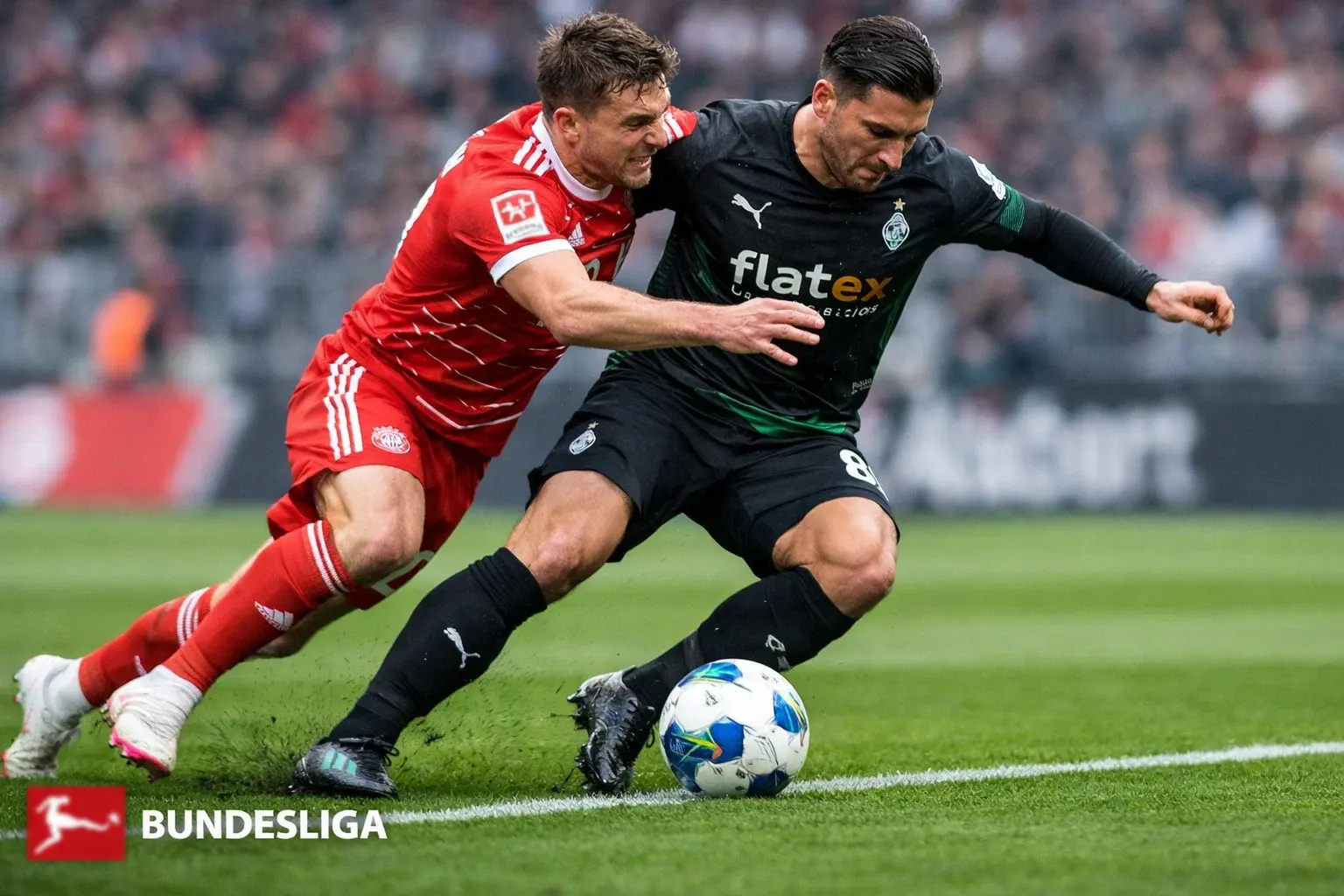
Understanding the reasons behind the statistics improves prediction accuracy.
Pressing philosophy dominates German tactical thinking. Teams across the Bundesliga employ aggressive high pressing, forcing turnovers in dangerous positions and creating transitions that produce goals. Unlike Italian football’s emphasis on defensive structure, German coaches prioritise winning the ball high and attacking quickly.
Full-back involvement in German football exceeds other leagues. Attacking full-backs push high, creating overloads in wide areas but leaving space behind. This tactical approach generates both scoring opportunities and defensive vulnerabilities, contributing to open, high-scoring matches.
Fitness and intensity characterise the Bundesliga’s physical demands. German training methods produce players capable of maintaining pressing intensity for 90 minutes. This sustained pressure prevents teams from “killing” games through possession management, keeping matches open throughout.
Cultural expectations play a role. German fans expect attacking football; managers who prioritise defensive solidity over entertainment face criticism and potentially dismissal. This cultural pressure encourages risk-taking that produces goals but also defensive errors.
Winter break gives players genuine recovery time. The Bundesliga’s mid-season pause (late December through mid-January) allows physical recuperation that maintains intensity levels when competition resumes, unlike the Premier League’s demanding Christmas schedule.
Market Selection for Bundesliga Betting
Different markets suit the Bundesliga’s characteristics.
Over goals markets represent the Bundesliga’s primary betting opportunity. Over 2.5 at typical odds of 1.65-1.80 offers value when applied selectively to appropriate fixtures. Over 3.5 at 2.20-2.60 provides higher-risk opportunities in matches featuring attacking teams.
Both Teams to Score aligns with Bundesliga patterns. At typical odds around 1.70-1.85, BTTS represents fair pricing given the league’s 55-60%+ hit rate. Combining BTTS with other selections can build value in bet builders.
Match winner markets in Bayern Munich fixtures require careful consideration. Bayern typically price around 1.10-1.25 at home against weaker opposition — margins too thin for consistent value despite high win probability. Better opportunities exist in competitive mid-table fixtures where uncertainty creates wider odds.
Asian Handicaps suit Bayern Munich’s dominance and the gaps between quality tiers. Bayern -1.5 or -2.0 against relegation candidates often represents better value than match winner at 1.15 odds. Similarly, handicapping promoted teams reflects their typical adjustment struggles.
Second-half goals deserve consideration given Bundesliga patterns. Approximately 55% of Bundesliga goals arrive after half-time, with second-half averages around 1.7 goals per match. Second-half over 1.5 goals offers opportunities in appropriate fixtures.
Team-Specific Betting Patterns
Certain Bundesliga clubs exhibit consistent betting patterns.
Bayern Munich dominates domestically with regularity that affects multiple markets. They score in virtually every match, produce overs with high frequency, and cover large handicaps against weaker opposition. However, their short match winner odds often lack value — the handicap and goals markets typically offer better opportunities.
Borussia Dortmund produces entertainment regardless of opponent quality. Their attacking talent combined with defensive inconsistency creates BTTS-friendly fixtures. Signal Iduna Park’s atmosphere makes home matches particularly high-scoring.
RB Leipzig and Bayer Leverkusen represent the Bundesliga’s emerging elite. Their pressing intensity and attacking quality produce goals at rates comparable to Bayern, often at more attractive odds given less overwhelming favouritism.
Newly promoted teams typically struggle initially before adjusting. Early-season matches against established Bundesliga clubs favour overs and the established teams covering handicaps. However, promoted clubs often improve significantly as seasons progress.
Relegation-threatened clubs produce unpredictable results. Desperation creates both unexpected victories and heavy defeats. These matches suit live betting where momentum becomes visible rather than pre-match predictions.
Seasonal Patterns and Timing
The Bundesliga calendar creates distinct betting phases.
August-December represents the main autumn phase before the winter break. Form patterns establish; promoted teams reveal their quality; the title race takes shape. This period offers the clearest value opportunities as genuine form emerges.
Winter break (late December-mid January) pauses the season for approximately three weeks. Unlike the Premier League’s Christmas congestion, Bundesliga players recover fully. Post-break form can differ from pre-break patterns as teams return refreshed or rusty.
February-May sees the season’s decisive phase. Title races conclude (often with Bayern confirmation), European qualification battles intensify, and relegation scrambles create pressure matches. Understanding what each team genuinely needs informs late-season betting.
Relegation playoff (16th place vs 2. Bundesliga 3rd place) creates unique two-legged drama in May. These high-stakes matches between mismatched opposition produce unpredictable results that reward informed analysis over assumptions.
Bookmaker Coverage and Market Efficiency
Bundesliga betting enjoys comprehensive coverage with specific characteristics.
Market depth is strong across major bookmakers, though slightly below Premier League levels. Goals markets, match winners, and Asian handicaps receive full attention; exotic player props may have limited coverage for smaller clubs.
Odds competitiveness varies by market and bookmaker. The Bundesliga’s popularity ensures reasonable pricing, but comparing across bookmakers reveals value differences, particularly in goals markets where different bookmakers price over/under lines differently.
Live betting suits the Bundesliga’s open, flowing matches. High-scoring games create numerous price movements; goals change probabilities dramatically; momentum swings are visible through sustained pressure. However, the same attacking openness that creates opportunities also produces rapid, unpredictable swings.
Promotional attention clusters around Der Klassiker (Bayern vs Dortmund) and other headline fixtures. Enhanced odds, accumulator bonuses, and free bet offers appear for major matches.
Common Bundesliga Betting Mistakes
Assuming every match produces goals overlooks fixture-specific factors. While the Bundesliga averages high goal totals, specific matchups (defensive teams meeting, end-of-season dead rubbers, weather-affected matches) produce lower-scoring affairs.
Underestimating Bayern Munich’s dominance leads to backing opponents at seemingly attractive odds. Bayern’s consistency at home particularly punishes those hoping for upsets. The value in Bayern matches lies in goals and handicaps, not opposing them.
Ignoring the winter break effect misses form disruptions. Teams return from the break in varying states — some refreshed and sharp, others rusty and disjointed. Early post-break matches require caution until patterns re-establish.
Overlooking 2. Bundesliga misses opportunities. Germany’s second division shares similar characteristics (high scoring, attacking football) with less bookmaker attention and potentially less efficient pricing.
Treating all Bundesliga matches identically ignores significant team-specific patterns. Bayern matches differ from relegation scraps; Leipzig’s pressing style produces different patterns than Augsburg’s approach. Fixture-specific analysis outperforms league-wide generalisation.
Data Resources for Bundesliga Betting
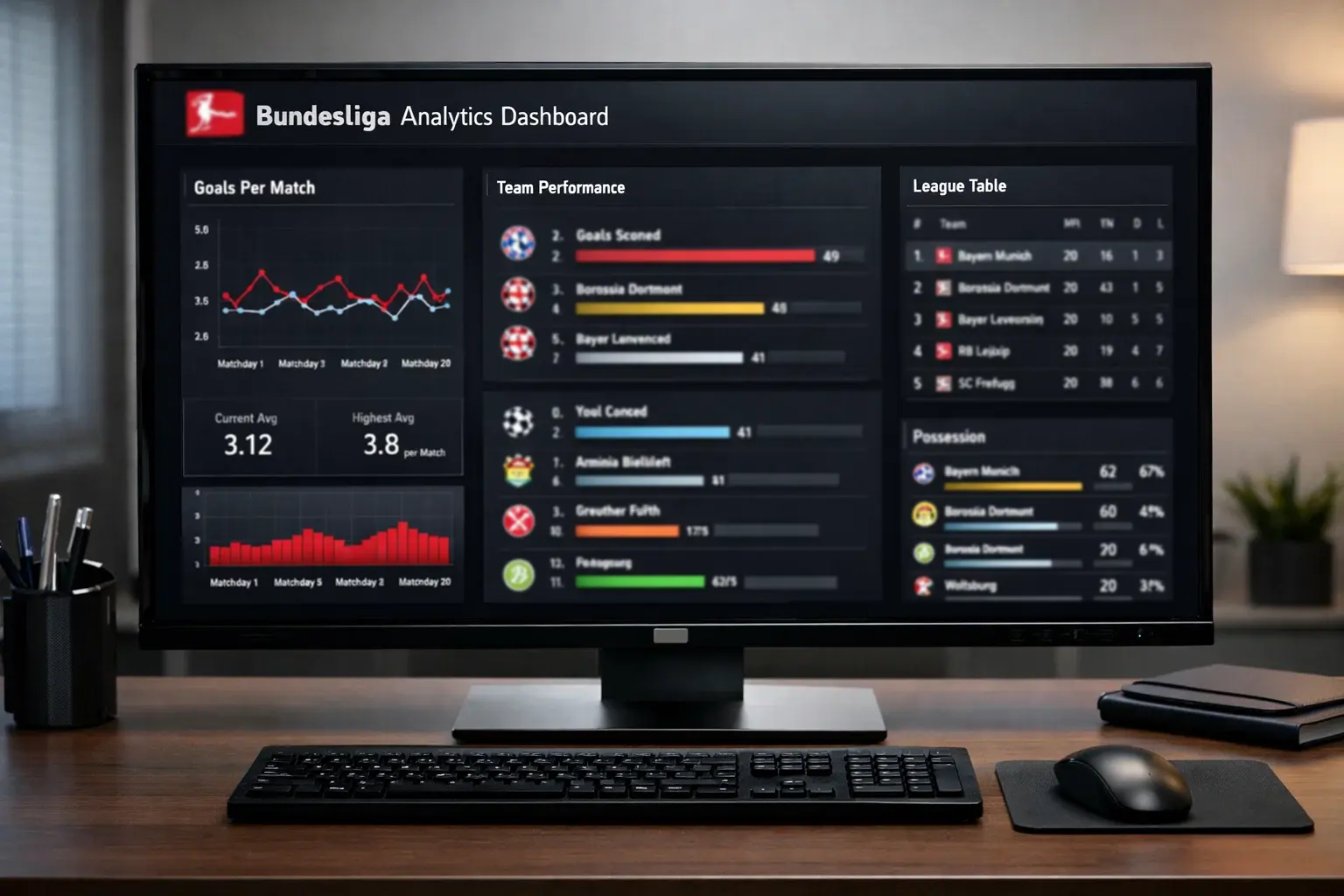
Comprehensive data enables informed Bundesliga analysis.
Bundesliga official statistics provide excellent baseline data through bundesliga.com. The league embraces analytics more openly than some competitors, making official sources genuinely useful rather than merely promotional.
German sports media (Kicker, Bild Sport, Sport1) offer extensive Bundesliga coverage. German language skills help access breaking news, though major developments reach English-language sources quickly.
Expected goals providers cover the Bundesliga comprehensively. Given the league’s high-scoring nature, xG analysis reveals which teams genuinely create quality chances versus those benefiting from variance.
Transfermarkt provides the gold standard for squad values, transfer activity, and injury information across German football. Their Bundesliga coverage depth exceeds most other data sources.
Fan community sources (including club-specific subreddits and forums) provide insight into training ground developments, player morale, and other soft information that affects performance but doesn’t appear in statistics.
The Bundesliga rewards bettors who embrace its unique characteristics rather than applying generic football betting approaches. The league’s high-scoring nature creates genuine statistical edges in goals markets, while its competitive structure beyond Bayern Munich offers value opportunities that more predictable leagues don’t provide.
