
Both Teams to Score (BTTS) Betting: Analysis and Strategy Guide
 Available in US
Both Teams to Score strips football betting down to a simple question: will each team find the net at least once? The final score, the winner, the margin of victory — none of it matters. A 1-1 draw and a 5-4 thriller both return the same result for BTTS Yes backers. This elegant simplicity makes BTTS one of the most popular betting markets, particularly for accumulators where bettors want action on multiple games without predicting specific winners. But simplicity doesn’t mean easy money. Around 50% of matches across major European leagues see both teams score, meaning the odds typically hover near evens — and that’s before the bookmaker takes their cut.
The appeal of BTTS extends beyond simplicity. Unlike backing a team to win, where a last-minute equaliser kills your bet, BTTS Yes bettors celebrate late goals regardless of which team scores them. You’re essentially betting on entertainment — on both attacks functioning well enough to breach the opposing defence at least once. Conversely, BTTS No appeals when you expect one or both teams to struggle offensively, or when elite defences should keep clean sheets.
How BTTS Markets Work
The mechanics couldn’t be simpler. BTTS Yes wins if both teams score at least one goal each during the 90 minutes plus stoppage time. BTTS No wins if one or both teams fail to score. Extra time in cup matches doesn’t count — only regular time goals affect the bet outcome.
Scorelines that trigger BTTS Yes include any result where both columns show at least one goal: 1-1, 2-1, 3-2, 4-4, even 10-1. The balance doesn’t matter, only that neither team drew a blank. Scorelines that trigger BTTS No include 0-0, 1-0, 2-0, 3-0, 5-0 — any match where at least one team keeps a clean sheet.
Odds typically range from 1.70-2.00 on either side for most matches, with variations based on the specific fixture. Matches between attacking teams with poor defences push BTTS Yes prices down toward 1.50-1.60. Matches involving dominant home favourites or defensively solid sides push BTTS No toward similar short prices. The market is efficient enough that finding significant edge requires genuine analytical insight.
One crucial distinction from over/under goals: BTTS and goal totals are correlated but not identical. A 3-0 result has three goals (over 2.5) but only one team scoring (BTTS No). A 1-1 result has just two goals (under 2.5) but both teams scoring (BTTS Yes). Understanding when BTTS Yes is more likely than over 2.5 — or vice versa — opens value opportunities when markets misprice these related but distinct outcomes.
Key Statistics for BTTS Analysis
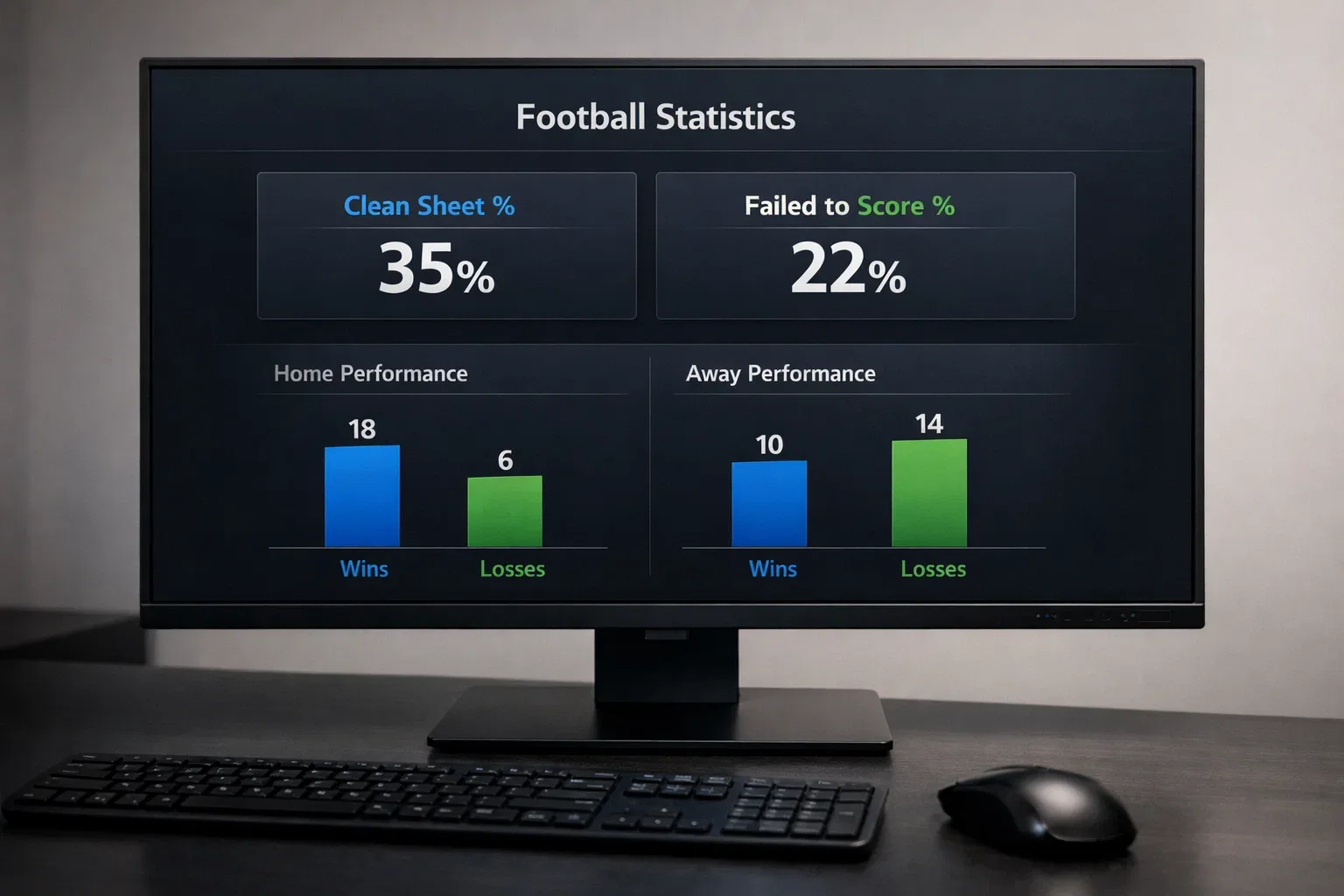
Effective BTTS betting requires examining both sides of the ball for each team: how often they score and how often they concede. The ideal BTTS Yes candidate scores frequently but also struggles defensively — they’ll contribute their goal but also allow the opponent opportunities.
Clean sheet percentage measures how often a team prevents the opponent from scoring. Teams keeping clean sheets in 40%+ of matches are BTTS No candidates; teams keeping clean sheets below 20% are BTTS Yes magnets. A matchup between two low-clean-sheet teams strongly favours BTTS Yes.
Failed to score percentage captures how often a team blanks. Teams failing to score in 30%+ of matches are BTTS No candidates regardless of their opponent’s defending. Even if your selection concedes, if they can’t score themselves, BTTS Yes fails. Both teams need functional attacks for BTTS Yes to hit.
Goals per game averages provide baseline expectations. A team scoring 1.8 per game and conceding 1.2 presents a different BTTS profile than a team scoring 0.8 and conceding 0.5. The former creates goal-filled affairs; the latter produces tight, low-scoring contests.
Home/away splits matter significantly. Many teams score consistently at home but struggle away, or defend well at home but collapse on the road. Chelsea might see BTTS in only 35% of home matches but 75% of away matches due to different tactical approaches. Always check location-specific stats rather than overall averages.
Recent form captures temporary fluctuations that season-long stats might miss. A team missing their starting goalkeeper for three weeks will likely see more BTTS results than their season average suggests. Injury to a key striker depresses their scoring probability, affecting BTTS likelihood.
League-Specific BTTS Patterns
Different leagues have distinct BTTS cultures that baseline probability estimates must account for. Betting BTTS at average odds requires knowing what “average” means for that competition.
The Bundesliga leads major leagues in BTTS percentage, typically seeing both teams score in 55-60% of matches. German football’s attacking philosophy, high defensive lines, and reluctance to sit deep creates open matches where shutouts are rare. BTTS Yes is almost the default expectation in Bundesliga fixtures.
The Dutch Eredivisie produces similar BTTS rates around 55-58%. Technical attacking play and adventurous tactics mean clean sheets are uncommon. Smaller stadiums and passionate home crowds encourage attacking approaches that benefit BTTS Yes.
The Premier League sits around 50-53% BTTS, roughly average among top leagues. The league’s competitiveness means even underdogs usually create chances, but increasing tactical sophistication has improved defensive organisation. Match-by-match analysis matters more than league-wide tendencies.
Serie A has evolved from its catenaccio reputation but still produces slightly lower BTTS rates around 47-50%. Italian tactical discipline and defensive organisation means shutouts remain more common than in Germany or the Netherlands.
Ligue 1 outside PSG matches tends toward lower scoring, with BTTS around 45-48%. Paris Saint-Germain distorts league averages — their matches often see BTTS as they score freely but occasionally concede against weaker sides trying to grab consolation goals.
Cup competitions typically produce lower BTTS rates than league matches. Underdogs defend deeply hoping for nil-nil draws and penalty shootouts. The stakes encourage conservative approaches that suppress goal scoring from both sides.
Identifying BTTS Value Opportunities
Finding value requires comparing your BTTS probability estimate against the implied probability from the odds. If odds of 1.85 imply 54% probability but your analysis suggests 62%, you’ve found potential value on BTTS Yes.
The attacking versus defending mismatch creates obvious BTTS Yes value. When a prolific attacking team faces a defensively weak side, both teams scoring becomes highly probable: the strong attack should score easily; the weak defence should concede opportunities for the opposition. Odds sometimes underestimate this when recent results don’t reflect underlying quality.
Double defensive weakness is the strongest BTTS Yes indicator. Two teams both struggling to keep clean sheets virtually guarantee goal concessions on both sides. If Team A concedes in 80% of matches and Team B concedes in 75%, the probability of at least one clean sheet is only around 5% (0.2 × 0.25), making BTTS Yes approximately 95% likely. Markets rarely price this aggressively.
Motivational factors influence BTTS probability beyond pure statistical tendencies. Teams already relegated may play with freedom that produces more chaotic, higher-scoring matches. Teams needing points might push forward aggressively in late stages, opening spaces for counters. Dead rubbers between mid-table sides often see attacking approaches since neither team has anything to defend.
Manager tendencies predict BTTS patterns independent of squad quality. Managers like Marcelo Bielsa, Jesse Marsch, and Julian Nagelsmann instil high-pressing, attacking styles that create open matches with goals at both ends. Conversely, managers prioritising defensive solidity (Diego Simeone, early-era Jose Mourinho) produce more clean sheets regardless of opponent quality.
Head-to-head history sometimes reveals fixture-specific patterns. Derby matches occasionally produce cagey 0-0s or 1-0s despite both teams being high-scoring in other fixtures. Certain tactical matchups repeatedly produce the same type of result across multiple seasons.
BTTS Combined Markets
Bookmakers offer numerous BTTS combination bets that package BTTS with other outcomes for enhanced odds. Understanding these markets expands your betting options.
BTTS and Over 2.5 Goals requires both teams to score AND total goals to exceed 2.5. This rules out 1-1 draws (BTTS Yes but under 2.5) and requires minimum 2-1 or 1-2 scorelines. The combination typically pays around 2.10-2.40 and suits matches where you expect attacking football with goals at both ends.
BTTS and Under 3.5 Goals wins on scorelines like 1-1, 2-1, 1-2, 2-2 — matches where both teams score but nobody runs away with it. This suits tactical battles between quality sides where clean sheets are unlikely but blowouts are equally improbable.
BTTS and Win requires selecting a winning team while both teams score. This effectively backs scorelines like 2-1, 3-1, 3-2, 4-2 for your chosen side. The combination suits strong favourites you expect to win but also to concede at least once. Odds are significantly better than straight match winner bets, providing value when you anticipate high-scoring victories rather than clean sheet wins.
First Half BTTS requires both teams scoring before halftime — a much tougher proposition with significantly higher odds. Games often take time to open up, with first-half goals less common than second-half goals. This market suits matches between attacking sides that start fast rather than build into games.
Building BTTS Accumulators
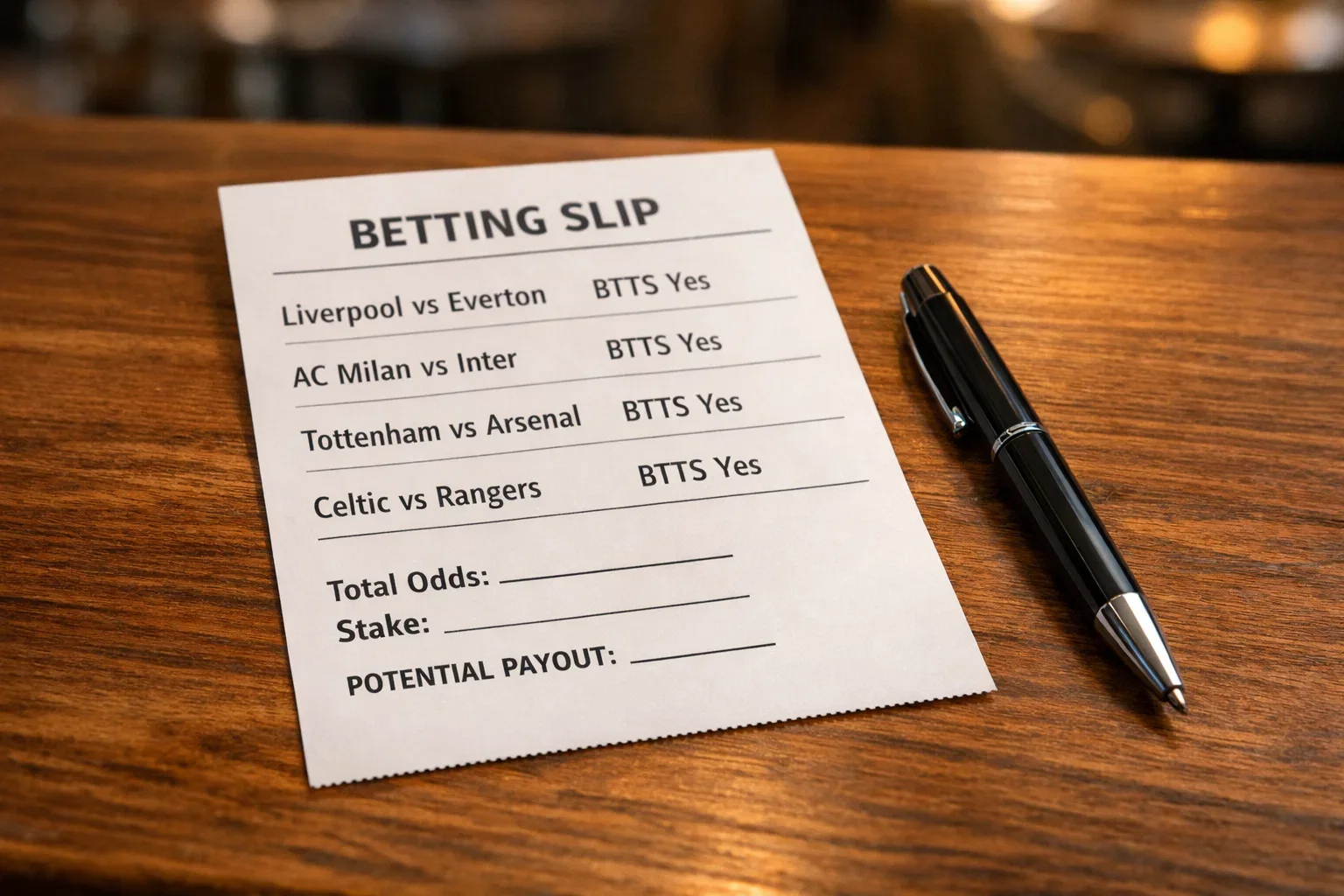
BTTS markets suit accumulator betting because individual selections have reasonable 50% ish hit rates — better than backing underdogs while still offering decent odds. However, BTTS accumulators require careful selection to avoid correlation traps.
Diversify across leagues to reduce systematic risk. If all your selections come from one league experiencing unusual weather or fixture congestion, all bets become correlated. Spreading across Premier League, Bundesliga, La Liga, and other competitions reduces this risk.
Avoid mixing BTTS Yes and No in the same accumulator. If your analysis identifies good BTTS No opportunities, they likely share characteristics (defensive matchups, conservative managers) that might apply across multiple fixtures. Mixing contradictory selections suggests inconsistent reasoning.
Check correlation between fixtures. Two matches involving teams from the same city might share weather conditions. Two matches at the same kick-off time might compete for goals as attention splits. These hidden correlations can make accumulators riskier than they appear.
Consider partial cover bets by separating your BTTS accumulator into smaller multiples. Instead of one six-fold, consider several trebles and doubles hitting overlapping selections. This provides return even when one or two legs fail while maintaining meaningful payouts when all selections win.
Common BTTS Betting Mistakes
Ignoring clean sheet rates while focusing only on attacking output leads to poor BTTS assessment. A team scoring 2.0 goals per game might seem like a BTTS Yes lock, but if they also keep clean sheets in 50% of matches, their games often finish 2-0 or 3-0 rather than 2-1 or 3-2.
Overweighting recent results without examining underlying performance causes reactive betting. A team involved in three consecutive BTTS No results might have dominated all three matches with multiple missed chances — their xG suggests BTTS Yes is due, not that they’ve become low-scoring.
Underestimating cup competition dynamics leads to disappointing BTTS Yes bets in knockout matches. Underdogs defend more conservatively when elimination looms; favourites sometimes play within themselves against dangerous opponents. Cup football produces more clean sheets than league football between the same teams.
Chasing losses with larger accumulators destroys bankrolls. After losing a BTTS four-fold, the temptation is adding more legs to recover with one big win. This mathematically accelerates losses by compounding the bookmaker’s margin across more selections.
Neglecting team news until after betting leaves you exposed. A key goalkeeper injury announced hours before kick-off transforms the match’s BTTS profile. A striker returning from suspension changes his team’s scoring probability. Build team news checks into your pre-bet routine.
BTTS betting rewards methodical analysis over gut feelings. The market’s efficiency means easy money doesn’t exist — but genuine edge emerges when you systematically identify matchups where attacking quality or defensive weakness creates higher BTTS probability than the odds reflect.
