
Cash Out in Football Betting: When to Use It and When to Avoid
 Available in US
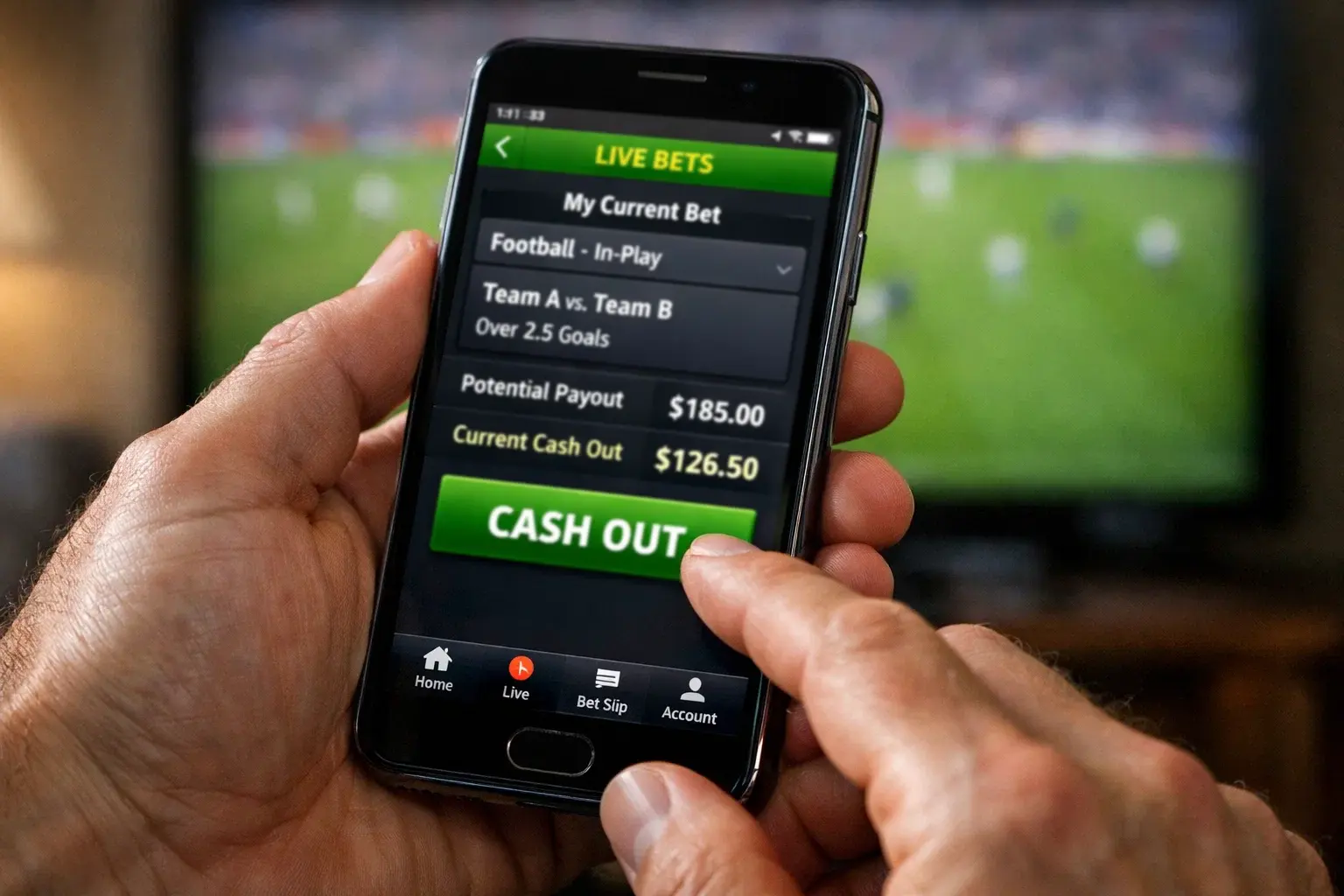
Cash out has become one of football betting’s most prominent features, marketed heavily by bookmakers as a way to take control of your bets. The appeal is obvious: secure profit before your accumulator’s final leg, or retrieve some stake from a bet that’s going wrong. However, understanding the mechanics behind cash out reveals why bookmakers promote it so enthusiastically — and when using it actually makes sense versus when it costs you money.
The fundamental principle is straightforward: cash out allows you to settle a bet before the event concludes, receiving a payout based on current probability rather than waiting for the final result. What’s less obvious is how bookmakers calculate these offers and why the feature benefits them more than it benefits you in most situations.
How Cash Out Works
Cash out calculations follow predictable logic based on current odds and bookmaker margin.
The basic formula considers your potential payout multiplied by current win probability, minus the bookmaker’s margin. If you backed Manchester United at 2.50 for £10 (potential return £25), and they’re winning 1-0 in the 80th minute, their current odds might be 1.15. The bookmaker calculates what your bet is now “worth” based on these shortened odds, then deducts their margin.
Margin is always deducted. Every cash out offer includes the bookmaker’s cut — typically 5-10% below “fair” mathematical value. This margin ensures bookmakers profit from cash out regardless of whether bettors use it on winning or losing positions.
Offers change constantly during live events. A goal, red card, or significant momentum shift immediately affects cash out values. When your team scores, offers increase; when they concede, offers drop. Market suspensions during key moments (penalties, VAR reviews) temporarily remove cash out availability.
Partial cash out allows taking some profit while leaving a portion of your bet active. If offered £80 cash out on a £100 potential win, you might cash out £40 (receiving that immediately) while keeping 50% of your bet running.
Why Bookmakers Love Cash Out
Understanding bookmaker motivations reveals when cash out works against you.
Cash out exploits emotional decision-making. Bettors are most tempted to cash out during moments of peak anxiety — when their team is defending a lead, when an accumulator hinges on one remaining leg, or when a bet is close to failing. These emotional peaks are exactly when cash out offers are least favourable mathematically.
The margin compounds bookmaker advantage. Every cash out interaction includes bookmaker margin. A bettor who cashes out frequently pays this margin repeatedly rather than once per bet, increasing the bookmaker’s overall take.
Bettors systematically misjudge probabilities. Research suggests bettors overestimate the likelihood of losing positions and underestimate the security of winning positions. This psychological tendency means bettors cash out winning bets too early (leaving value) and hold losing bets too long (missing better cash out opportunities).
Cash out encourages betting activity. The feature makes betting feel more interactive and controllable, encouraging more frequent wagering. Bookmakers benefit from increased turnover regardless of individual cash out decisions.
When Cash Out Makes Sense
Despite bookmaker advantages, specific situations justify using cash out.
Genuine new information changes your assessment. If you backed a team before learning their key striker is injured during warm-up, cashing out reflects updated probability rather than emotional reaction. The cash out offer may represent fair value given information you didn’t have when placing the bet.
Your original analysis was wrong. Watching a match unfold might reveal your pre-match assessment was flawed — perhaps the team you backed is being dominated despite the scoreline. Cashing out acknowledges analytical error rather than hoping luck compensates for poor judgment.
Life circumstances require certainty. Sometimes guaranteed money now matters more than optimal expected value. If cashing out £200 from a potential £300 win meaningfully affects your finances, the certainty may justify the mathematical cost. This isn’t optimal strategy but recognises that betting theory and personal circumstances sometimes diverge.
Accumulator insurance alternatives. Rather than relying on bookmaker cash out for accumulators, some bettors lay their accumulator on betting exchanges as insurance. However, if exchange access isn’t available or liquidity is insufficient, bookmaker cash out provides similar (though more expensive) protection.
Pre-match cash out on value shifts. If you backed a team at 3.00 and their odds drift to 3.50 before kickoff due to team news, you’ve already captured value. Cashing out locks in profit without match risk. This represents genuine edge realisation rather than emotional decision-making.
When to Avoid Cash Out
Most cash out usage falls into categories where avoiding it produces better long-term results.
Don’t cash out winning positions from anxiety. Your team leading 2-0 in the 75th minute feels precarious emotionally, but mathematically represents strong probability. Cash out offers in these situations are calculated to exploit your anxiety, not reflect genuine risk. The bookmaker margin means you’re paying for certainty you probably don’t need.
Don’t cash out accumulators because “anything can happen.” Yes, the final leg of your accumulator might lose. But if you’ve correctly assessed each selection, the expected value of letting it run exceeds the cash out offer (which includes margin). Systematically cashing out accumulators early guarantees underperformance.
Don’t cash out to “lock in profit” reflexively. The concept of “locking in profit” sounds prudent but often means accepting less than your bet is worth. If your position has 90% win probability and the cash out represents 85% of potential winnings, you’re surrendering 5% equity for psychological comfort.
Don’t cash out losing positions hoping to “save something.” When your bet is losing, cash out offers reflect the low probability of recovery — minus bookmaker margin. Unless you have genuine reason to believe recovery is even less likely than the market suggests, holding offers better expected value than accepting discounted cash outs.
Don’t cash out frequently. Each cash out interaction includes margin. Bettors who cash out routinely across many bets pay this margin repeatedly, significantly impacting long-term returns compared to bettors who let most bets run to conclusion.
Cash Out vs Exchange Trading
Betting exchanges offer superior alternatives to bookmaker cash out.
Exchange trading eliminates bookmaker margin. When you want to close a position on Betfair, you’re trading at market odds rather than accepting a margin-inflated offer. The 2-5% commission on net profits is typically less costly than the 5-10% embedded in cash out calculations.
You control the price. On exchanges, you can set the odds at which you’re willing to close your position rather than accepting whatever the bookmaker offers. This flexibility enables capturing better value when patient.
Market prices reflect true probability. Exchange odds represent aggregate market opinion without bookmaker manipulation. This gives clearer information about your position’s actual value.
The practical limitation is exchange liquidity. Major football matches have deep markets enabling easy position closure; lower-profile games may lack sufficient liquidity for meaningful trades. When exchange options aren’t available, bookmaker cash out becomes the only closure mechanism — but understanding its cost helps inform whether closure is worthwhile.
Practical Cash Out Strategy
If you use cash out, approach it strategically rather than emotionally.
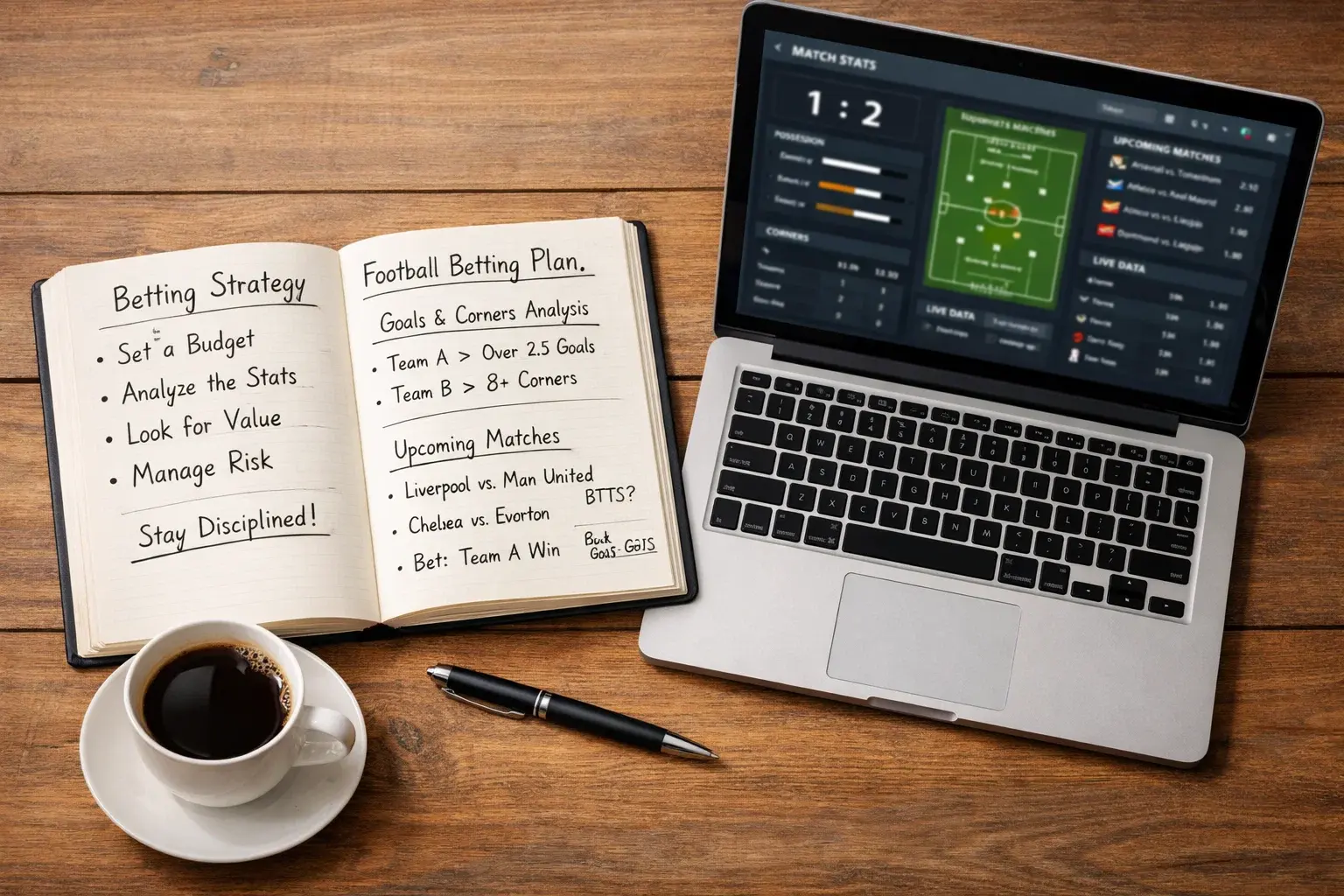
Set decision rules in advance. Before matches begin, determine conditions under which you’d consider cashing out. “I’ll cash out if they go down to 10 men” is a rule; “I’ll cash out if I get nervous” is not.
Compare to exchange prices when possible. Before accepting bookmaker cash out, check equivalent exchange odds. The difference reveals how much you’re paying for the bookmaker’s service.
Track your cash out decisions. Record situations where you cashed out and what would have happened if you hadn’t. Over dozens of instances, patterns emerge showing whether your cash out decisions add or subtract value.
Use partial cash out for genuine hedging. If you want to reduce exposure without eliminating upside, partial cash out achieves this more elegantly than full cash out. Taking 50% of available cash out while leaving 50% running balances certainty and opportunity.
Avoid cash out during emotional peaks. The moments when you most want to cash out are typically the worst times to do it. Implement a personal rule: never cash out in the immediate aftermath of a significant match event. Wait for emotions to stabilise before deciding.
Cash out is neither inherently good nor bad — it’s a tool that bookmakers have designed to benefit themselves while providing genuine utility in limited situations. Understanding when that utility exists versus when you’re simply paying for unnecessary certainty transforms cash out from a profit drain into an occasionally useful feature.
