
Football Corner Betting: Markets, Statistics and Strategies
 Available in US
Corner betting offers an alternative to goal-focused markets, shifting attention to a match statistic that occurs far more frequently than goals. While most football matches produce two or three goals, they typically generate ten to twelve corners. This higher frequency creates more stable statistical patterns and, theoretically, more predictable outcomes. Corner markets attract bettors frustrated by the randomness of goalscoring — a brilliant save or a missed sitter can swing a goals bet, but corner totals depend more on sustained attacking pressure and playing styles that remain consistent across matches.
The appeal is straightforward: corners happen regularly enough to analyse statistically, yet bookmakers devote less attention to corner pricing than to headline markets. This combination suggests potential inefficiencies for bettors willing to research team-specific corner patterns rather than defaulting to lazy league averages. However, corner betting has its own challenges — weather can dramatically affect totals, match state influences tactical approaches, and the margins are often tighter than they appear.
Understanding Corner Betting Markets
The most common corner market is Over/Under Total Corners, functioning identically to goals over/under. Bookmakers set a line — typically around 9.5-10.5 for major league matches — and you bet whether the combined corners for both teams will exceed or fall below that threshold. Over 10.5 wins if there are 11 or more corners; under wins with 10 or fewer.
Lines vary by fixture based on the bookmaker’s assessment of each team’s corner-generating tendencies. A match between two attacking, wing-focused teams might see lines at 11.5 or 12.5. A defensive encounter between mid-table sides content with a point might have lines at 8.5 or 9.5. Understanding why lines differ between fixtures is the foundation of corner betting strategy.
Asian Corner Handicaps apply handicap betting principles to corner counts. If one team is expected to win significantly more corners, they might be priced at -2.5 corners (needing to win three more corners than their opponent) while the underdog receives +2.5. Quarter-line handicaps (like -1.75 or +2.25) work identically to Asian goal handicaps, splitting stakes between adjacent lines.
Most Corners betting requires predicting which team will earn more corners. Unlike over/under, this market has three outcomes: home wins corners, away wins corners, or equal corners (draw). The draw option typically offers attractive odds (around 8.00-12.00) because exact equality happens in roughly 10-15% of matches, but it’s genuinely hard to predict when it will occur.
First/Last Corner markets bet on which team takes the first or last corner of the match. These are largely random — first corner especially depends on early match flow rather than underlying team quality. The odds are usually close to 2.00 each side, reflecting near-50/50 probability. Unless you have specific insight into a team’s fast-start tendencies, these markets are essentially coin flips with margin.
First Half/Second Half Corners splits the match into halves for separate corner totals. Second halves typically produce slightly more corners than first halves due to teams chasing games, increased urgency, tired legs creating defensive mistakes, and stoppage time adding extra minutes. Knowing this baseline helps evaluate half-specific lines.
Corner Race markets bet on which team reaches a specified corner count first (e.g., race to 3 corners). These combine elements of first corner and total corners — a team that starts fast and attacks consistently will often win corner races regardless of final totals.
What Drives Corner Totals?
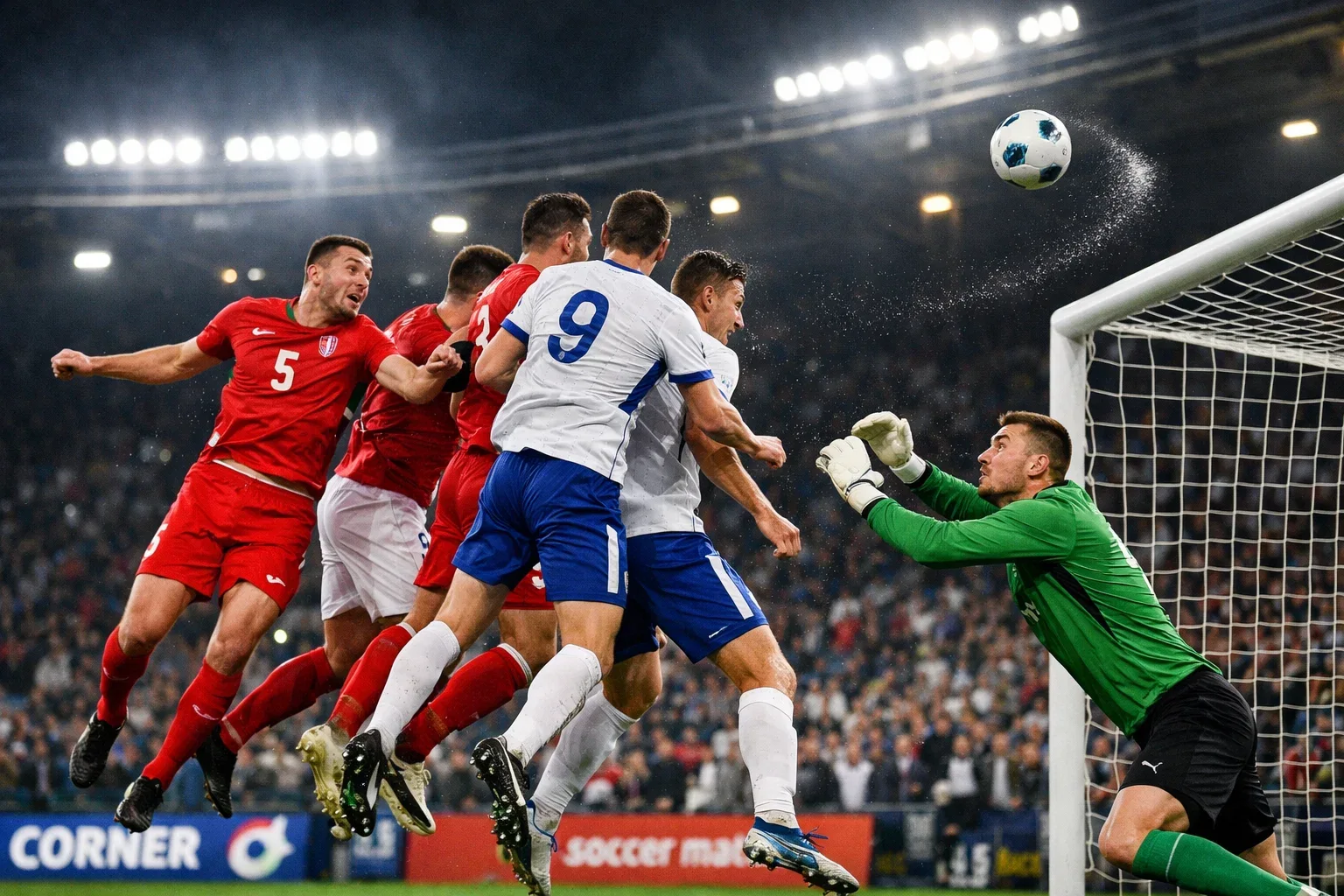
Understanding the factors that generate corners enables more accurate predictions than simply looking at historical averages.
Playing style is the primary driver. Teams that attack through wingers, deliver crosses frequently, and shoot from distance generate more corners. Crosses blocked for corners, shots deflected wide, and set-piece deliveries whipped toward the far post all produce corner opportunities. Teams that play centrally, maintain possession in midfield, and only shoot from high-percentage positions generate fewer corners because they’re not putting balls into areas where defensive blocks create corners.
Formation and tactical approach shapes corner tendencies. 4-3-3 and 4-2-3-1 formations with genuine wingers typically produce more corners than narrow 4-4-2 diamonds or 3-5-2 systems. Teams pressing high force opponents to clear hastily, often out for corners. Teams sitting deep and absorbing pressure concede more corners but don’t generate many themselves.
Quality differential affects corner distribution. When a strong team dominates a weaker opponent, the favourite tends to monopolise possession in attacking areas, generating corner after corner while conceding few. Balanced matches between similar-quality teams produce more evenly split corner counts but potentially lower totals as neither side dominates territorially.
Match state dramatically influences corner counts. Teams chasing goals attack with increasing desperation, launching balls into the box regardless of whether clear chances exist. Corners often cluster late in matches when trailing teams throw bodies forward. Conversely, teams protecting leads may deliberately slow play, reducing attacking actions and therefore corners. A 0-0 with 20 minutes remaining produces different corner dynamics than 3-0 with 20 minutes remaining.
Weather conditions matter more for corners than most statistics. Wind affects cross delivery and shot accuracy, potentially increasing corners as balls fly unpredictably. Heavy rain makes pitch surfaces slippery, causing more wayward passes and shots. Poor conditions generally increase corners by making clean, controlled attacking play more difficult.
League-Specific Corner Patterns
Different leagues have distinct corner cultures that baseline your expectations for corner betting.
The Premier League averages around 10-11 corners per match, with significant fixture-to-fixture variation. The league’s physical intensity and willingness to deliver crosses creates consistent corner generation. Big-six matches often exceed league averages due to attacking intent on both sides.
The Bundesliga typically produces slightly more corners than the Premier League, averaging 10.5-11.5. German football’s attacking philosophy, high pressing, and wide-focused play generates corner opportunities. Bayern Munich matches often feature 12+ corners as they dominate possession in attacking areas.
La Liga historically produces fewer corners than other top leagues, averaging 9-10. Spanish football’s emphasis on technical play, patient build-up, and central combinations means fewer crosses flying into the box. However, matches involving Atletico Madrid (defensive, set-piece focused) often exceed league averages.
Serie A sits around 10 corners per match, with high variance between attacking and defensive team matchups. Italian tactical discipline means some fixtures produce 6-7 corners while others reach 14-15, depending on whether teams play openly or cautiously.
Ligue 1 averages similar to Serie A, with PSG matches typically featuring high corner counts (12+) due to their territorial dominance against weaker opponents.
Lower leagues generally produce fewer corners than top divisions. Less technical quality means more direct play but also more turnovers in non-dangerous areas. Championship, Serie B, and equivalent competitions average 9-10 corners, slightly below their top-flight counterparts.
Analysing Teams for Corner Betting
Effective corner betting requires team-specific analysis beyond league averages. Several metrics matter:
Corners for per game measures how many corners a team earns on average. High-pressing, wing-focused teams average 5.5-6.5 corners per match; passive, central teams average 4-5. Check home/away splits — some teams attack more at home (higher corners for) while others counter-attack away (lower corners for).
Corners against per game measures corners conceded. Teams that defend deep and compact concede more corners because opponents have extended possession in attacking areas. Teams that press high and win possession early concede fewer because opponents rarely establish attacking positions.
Combined average (corners for + corners against) indicates a team’s likely match total contribution. If Team A averages 5.5 for and 4.5 against (10.0 combined) and Team B averages 5.0 for and 5.5 against (10.5 combined), their match might expect around 10-11 corners — but this simple addition doesn’t account for tactical interaction.
Recent form can deviate from season averages due to injuries, tactical changes, or fixture difficulty. A team missing their creative winger might generate fewer corners than usual. A team facing a run of tough fixtures might see corners against spike temporarily.
Head-to-head history occasionally reveals fixture-specific patterns. Some matchups consistently produce high or low corner counts regardless of season-to-season squad changes. Check the last 5-6 meetings between the specific teams you’re analysing.
Finding Value in Corner Markets
Value exists when your estimated probability exceeds the implied probability from bookmaker odds. The challenge is estimating probability accurately enough to identify mispricing.
Compare lines to combined averages. If Team A’s matches average 11.2 total corners and Team B’s matches average 10.8 total corners, a combined estimate of around 11 suggests value on over 10.5 if priced at 1.95+, but no value on over 11.5 unless you have specific reasons to expect more corners than normal.
Identify tactical mismatches. When a wing-heavy attacking team faces a deep-defending opponent, corners typically exceed neutral expectations. The attacking team will pepper the box with crosses; the defending team will block many for corners. This mismatch creates overs value even if league averages suggest lower totals.
Account for match importance. Dead rubbers and mid-season matches with nothing at stake often see more open play and consequently more corners. High-stakes matches (cup finals, relegation deciders) can go either way — sometimes tense and cagey with few corners, sometimes frantic with many.
Monitor weather forecasts. Windy conditions genuinely increase corner totals. If forecasts predict strong winds at a ground, consider whether the over line offers value. Rain and poor pitch conditions have similar but smaller effects.
Check for team news affecting style. If a team’s primary winger is injured and replaced by a central midfielder, their corner generation drops. If their holding midfielder is out and replaced by an attacking player, they might concede more corners while generating more themselves.
In-Play Corner Betting
Live corner betting allows reaction to match developments that pre-match analysis couldn’t predict.
Early corner patterns can indicate match tempo. If there are 5 corners in the first 20 minutes, the pace suggests more to come — potentially exceeding pre-match totals lines. If there are 0 corners through 25 minutes despite balanced play, consider whether the under line has shifted enough to offer value.
Match state adjustments matter enormously. A team trailing late will abandon defensive shape and attack continuously, generating corners (and potentially conceding them on counters). Recognising when a match is about to open up lets you bet overs before lines fully adjust.
Red cards typically reduce corner totals. The ten-man team defends deeper and attacks less; the team with numerical advantage may be content to hold possession rather than force attacks. Consider unders when red cards are shown, unless the leading team needs more goals for some external reason.
Substitution patterns reveal intent. Attacking substitutes (wingers replacing defensive midfielders, strikers replacing wing-backs) signal increased attacking intent and potential corner increases. Defensive substitutes signal consolidation and likely corner reduction.
Building a Corner Betting Approach
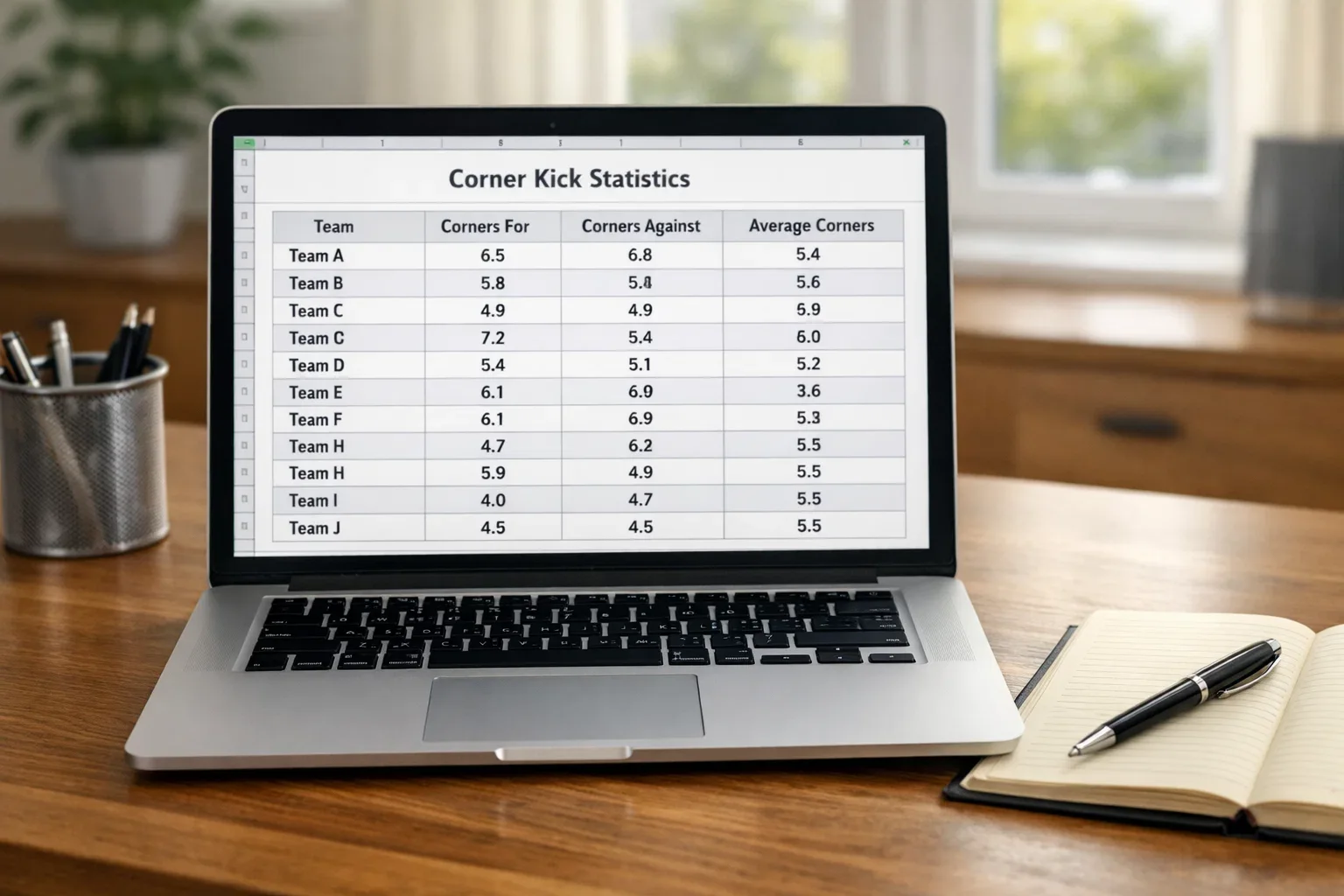
Develop systematic rather than intuitive corner betting. Start with clear scope — which leagues will you specialise in? Trying to analyse corners across ten leagues produces shallow knowledge; focusing on two or three enables genuine expertise.
Create a database tracking corner statistics for teams in your scope: corners for home/away, corners against home/away, combined totals, recent form deviations, and head-to-head records. Update after each matchday to maintain current data.
Before each betting round, calculate expected corners for each fixture based on team averages, accounting for home/away factors and known stylistic matchups. Compare your estimates to bookmaker lines to identify potential value.
Track every bet with full details: fixture, market, line, odds, your estimated probability, stake, and result. Over hundreds of bets, analyse performance by market type, league, and line type. You may discover edge in specific areas (e.g., first-half overs in Bundesliga) while losing in others (e.g., corner handicaps in Serie A).
Corner betting rewards patient, data-driven analysis. The markets are liquid enough to offer consistent opportunities, yet niche enough that bookmakers don’t price with the same precision as headline goal markets. For bettors willing to track statistics and understand what drives corner totals, the market offers genuine potential for long-term profitability.
