
The Lay the Draw Strategy: Trading Football on Betting Exchanges
 Available in US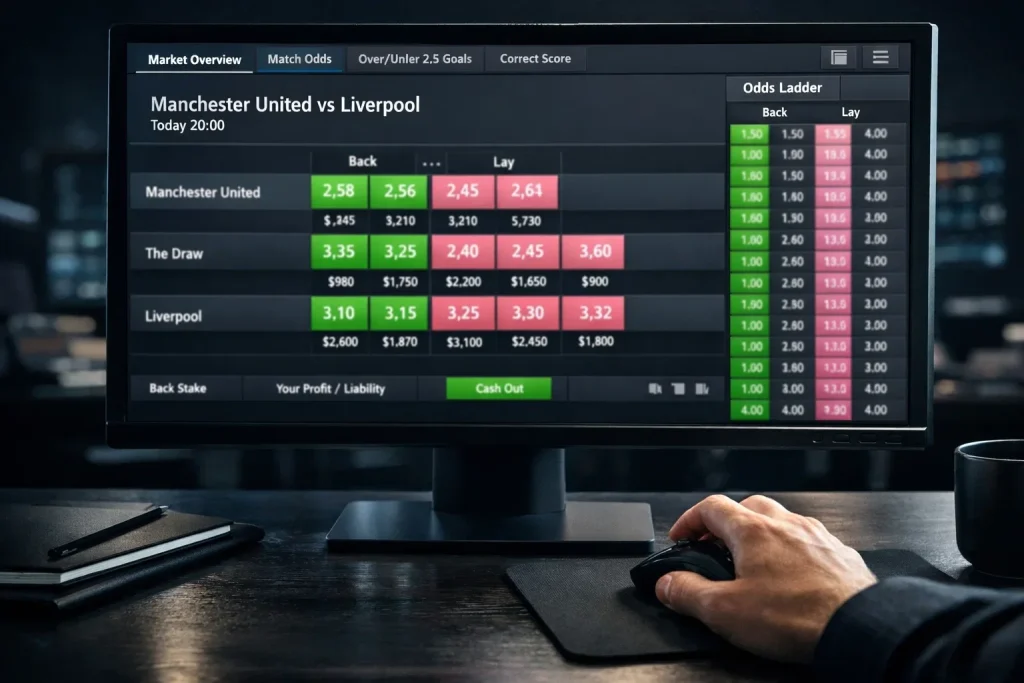
Lay the Draw (LTD) is perhaps the most famous football trading strategy, originating shortly after Betfair launched in 2000 and remaining popular despite significant market evolution since. The concept exploits a reliable pattern: when a goal is scored in a football match, draw odds lengthen because a draw becomes less likely. By laying the draw before a goal and backing it at higher odds after, traders lock in profit regardless of the final result. It sounds elegantly simple — because conceptually it is — but profitable execution requires disciplined match selection, appropriate timing, and sensible exit strategies.
The strategy requires a betting exchange account (Betfair, Smarkets, or Betdaq) rather than traditional bookmaker. Exchanges allow you to “lay” outcomes — essentially betting against them happening — which bookmakers don’t permit. When you lay the draw, you’re betting that the match won’t end in a draw. If any team wins, your lay bet wins. If the match ends drawn, your lay bet loses. The trading element comes from closing your position before the match ends, converting price movements into profit.
How Lay the Draw Works Step by Step
The basic LTD trade follows a four-step process that transforms match odds movements into guaranteed profit.
Step 1: Lay the draw before or during the match. You place a lay bet on the draw at current odds — let’s say 3.50. This means you’re betting against a draw. Your liability is your stake multiplied by (odds minus 1). A £100 lay at 3.50 creates £250 liability — the amount you lose if the match ends drawn.
Step 2: Wait for a goal to be scored. Once either team scores, the draw becomes less likely (the match is no longer 0-0). Draw odds lengthen as the market reprices the reduced draw probability.
Step 3: Back the draw at the new higher odds. After the goal, draw odds might have moved from 3.50 to 5.50. You now place a back bet on the draw at these higher odds. The difference between your lay odds (3.50) and back odds (5.50) creates your profit margin.
Step 4: Green up for guaranteed profit. Using the exchange’s cash-out function or manual calculation, you distribute your profit across all outcomes so you’re guaranteed the same return whether the final result is home win, away win, or draw.
Example calculation:
Initial lay: £100 at 3.50 (liability £250)
After goal, back: £63.64 at 5.50 (potential return £350)
If match doesn’t end drawn: Win £100 from lay, lose £63.64 back stake = +£36.36
If match ends drawn: Lose £250 from lay, win £286.36 (£350 – £63.64) from back = +£36.36
The position is “green” — profitable regardless of outcome.
Match Selection: The Critical Factor
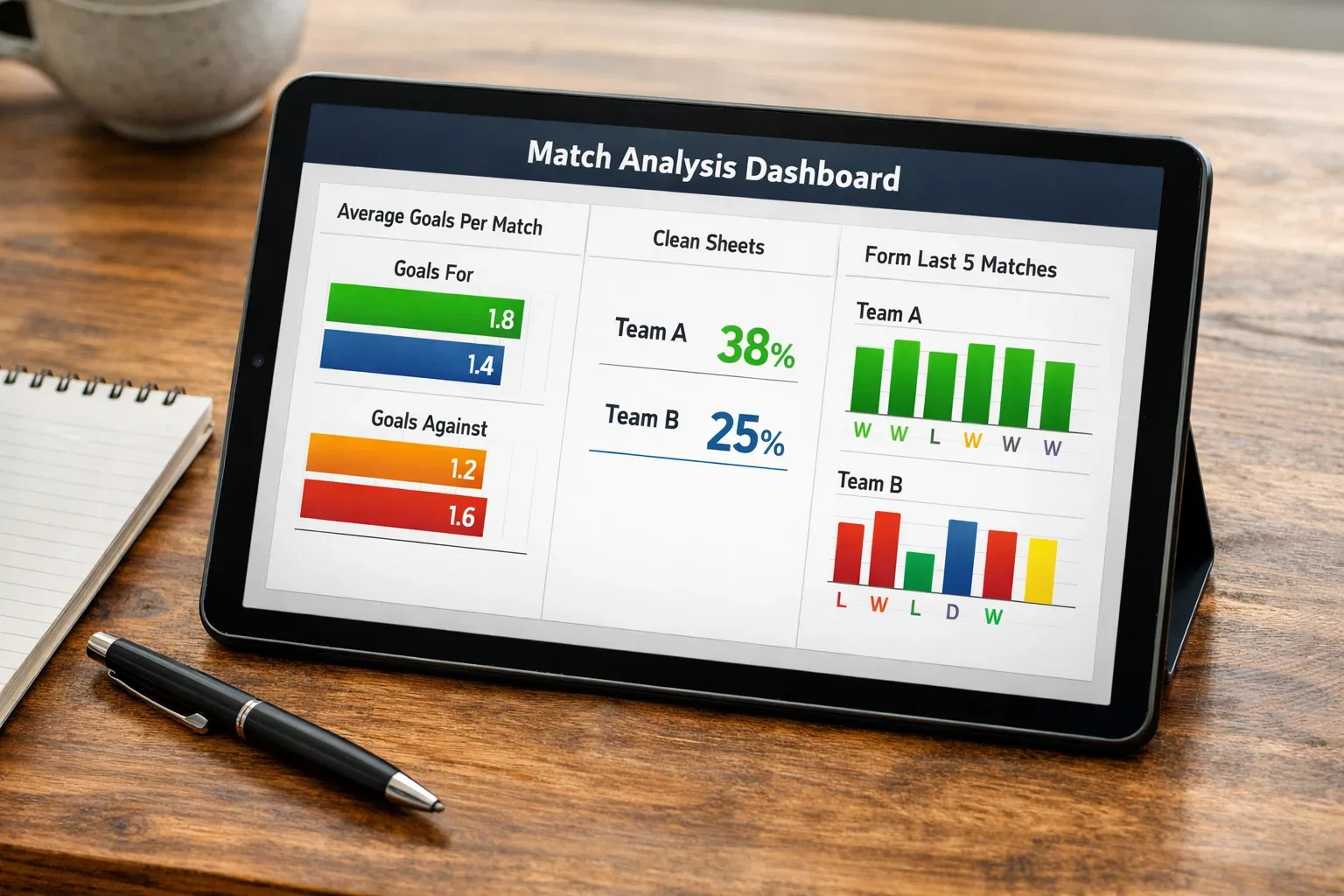
Successful LTD trading depends entirely on match selection. The strategy needs goals — specifically, at least one goal before the match ends. Selecting matches likely to produce goals (and unlikely to finish 0-0) is fundamental.
Look for high-scoring teams. Research recent goal statistics for both teams. Teams averaging 2.5+ goals per game in their recent matches provide more goal expectancy than defensive sides grinding out 1-0 results. Both teams should ideally show scoring form.
Avoid defensive matchups. When two defensively solid teams meet, 0-0 draws become more likely. LTD needs goals; defensive stalemates are the worst possible outcome. Check recent clean sheet percentages and avoid matches where both teams regularly keep clean sheets.
Consider expected goals (xG) data. Teams with high xG creation indicate quality chance-making that should convert to goals over time. A team underperforming their xG is statistically “due” goals — useful for LTD selection.
Match importance matters. Cup finals, relegation deciders, and other high-stakes matches can produce cagey football with fewer goals. Early-season matches often see more open play. Meaningless end-of-season games can go either way — sometimes dull, sometimes goal-fests.
Draw odds provide information. The market prices draw probability. Odds of 3.20-3.80 suggest a reasonably balanced match where draws are plausible but not expected. Odds above 4.50 suggest an unbalanced match where one team is strongly favoured — draws less likely, but if the underdog scores first, draw odds might not move much.
Optimal Entry Timing
When you lay the draw significantly affects both risk and reward. Different entry points suit different approaches.
Pre-match entry involves laying the draw before kick-off. This captures full odds movement from any goal but exposes you to maximum liability time — the entire match. Early goals benefit you; late goals or 0-0 halves test patience and nerve.
Half-time entry (if 0-0) reduces exposure time. Draw odds typically haven’t moved much if it’s 0-0 at half-time, so you capture most of the potential movement. The second half statistically produces more goals than the first half. Risk is that a 0-0 first half might indicate a match lacking goals.
In-play entry during dominant spells requires live-watching but can offer superior timing. If you see a team creating multiple clear chances without scoring, draw odds might still be relatively low despite imminent goal probability being high. Entering during attacking pressure can time your lay perfectly.
Avoid entry after goals unless you’re playing advanced variations. Once a goal is scored, the major draw odds movement has happened. Laying at 5.00+ odds creates enormous liability and requires a second goal for meaningful further movement.
Exit Strategies and Variations
How you close your LTD position affects profitability. Several approaches exist beyond the basic “back after any goal” method.
Immediate green-up after first goal is the simplest exit. As soon as a goal is scored, back the draw at new odds and green up for guaranteed profit. This is conservative — you lock in profit immediately but don’t capture potential additional movement from further goals.
Wait for second goal is more aggressive. After the first goal, draw odds lengthen; after a second goal (assuming it extends the lead rather than equalising), odds lengthen further. A 2-0 scoreline produces higher draw odds than 1-0. Waiting for the second goal captures more profit but risks the team losing their lead meanwhile.
Remove risk from the draw is a variation where instead of greening up evenly, you place your back stake so that profit exists on home win and away win but exactly £0 on the draw. This maximises profit if either team wins but returns nothing if the match ends drawn. More experienced traders use this to add 10-20% to profits but accept occasionally getting nothing.
Time-based exits work when you’re losing patience or concerned. If it’s 0-0 at 70 minutes, draw odds have shortened (draws are more likely as time runs out without goals). You might cut losses by backing the draw at shorter odds than you laid, accepting a small loss rather than risking larger loss on 0-0 finish.
Understanding Liability and Risk
LTD liability requires more capital than typical betting. When you lay at 3.50 for £100, your liability is £250 — not your stake. Appropriate bankroll sizing must account for this.
Worst case scenario: The match ends 0-0 (or any draw). Your lay bet loses full liability. If you laid £100 at 3.50, you lose £250. This isn’t a minor setback — it wipes out profits from multiple successful trades.
Break-even calculation: If your liability is £250 and each successful trade profits £35, you need roughly seven winning trades to cover one losing trade. This means your strike rate must exceed 87.5% just to break even — achievable but demanding.
Liability relative to bankroll: Conservative LTD traders risk perhaps 2-3% of total bankroll per trade in liability terms (not stake terms). With £10,000 bankroll, maximum liability might be £200-300 per trade.
Partial losses occur when you exit positions at inferior prices. Backing the draw at lower odds than you laid (cutting losses mid-match) creates smaller but still meaningful losses that accumulate over time.
Why Lay the Draw Became Less Profitable
LTD’s popularity created market dynamics that reduced its profitability over time. Understanding these dynamics helps calibrate expectations.
Market efficiency improved. When thousands of traders execute the same strategy, markets anticipate and price it in. Goal price movements became smaller as liquidity from LTD traders absorbed the impact. Where draw odds once jumped dramatically after goals, movements are now more modest.
Competition compresses profits. When a goal is scored, many traders simultaneously try to back the draw. Early traders get matched at 5.50; by the time others place orders, odds have dropped to 5.20, then 5.00. The profit available per trade declined.
Information spreads faster. Live statistics, streaming, and alerts mean goals are known instantly by thousands of traders. The window to capture optimal prices after goals shrank from minutes to seconds.
Bookmaker awareness. Traditional bookmakers studied exchange trading patterns and adjusted their in-play pricing. Some now offer competitive in-play odds that reduce the exchange’s relative advantage.
Does Lay the Draw Still Work?
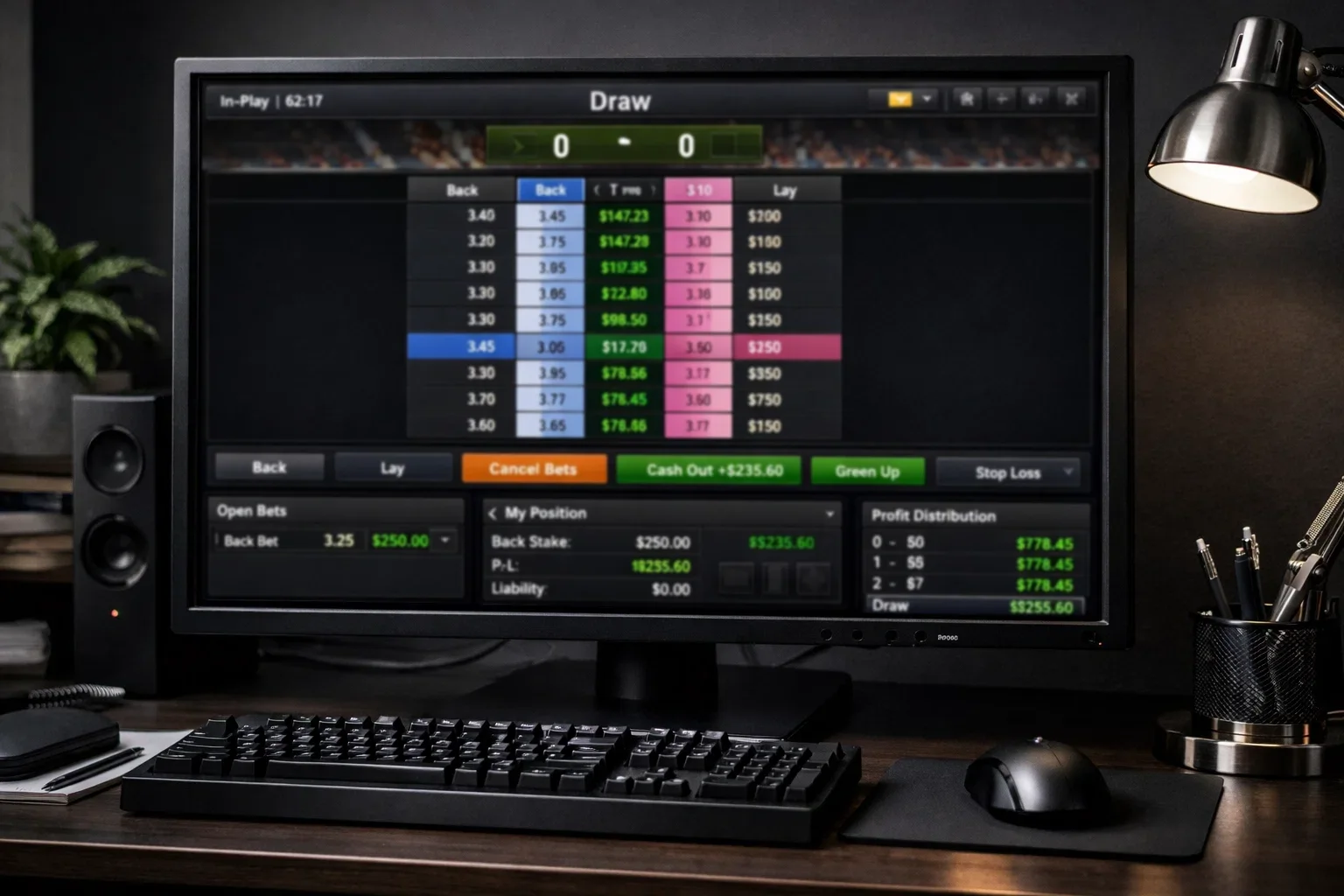
LTD remains viable but requires more sophistication than in its early years. Success now demands:
Superior match selection. Generic “lay any match with decent odds” doesn’t work. You need genuine edge in identifying matches likely to produce goals, avoiding 0-0 traps that casual traders fall into.
Watching matches live. Traders who watch matches gain information advantages — seeing which team dominates, how the game flows, when goals look imminent. Data-only traders compete at a disadvantage.
Specialisation in specific leagues. Rather than trading any available match, specialise in leagues you understand deeply. Knowledge of team tendencies, manager approaches, and fixture contexts creates edge.
Combining with other information. Integrate xG data, live statistics, tactical analysis, and team news into selection criteria. Multi-factor models outperform single-factor approaches.
Realistic profit expectations. LTD won’t make you rich quickly. Consistent small profits accumulating over hundreds of trades is the realistic outcome for successful practitioners.
Tools and Resources for LTD Trading
Several tools enhance LTD execution and analysis.
Trading software like Bet Angel, Geeks Toy, and Fairbot provide faster bet placement, automated trading rules, and ladder interfaces that speed up execution. The seconds saved can capture better prices.
Live statistics platforms (SofaScore, FlashScore, FotMob) provide real-time match data including shots, possession, and attacks. These inform in-play decision-making when you’re not watching video.
Draw odds predictors (available in Bet Angel and similar software) estimate where draw odds will move after the next goal based on current market structure. This helps evaluate whether potential profit justifies entry.
Historical data and backtesting allows strategy validation before risking real money. Does your selection criteria historically produce profitable LTD opportunities? Test before trading.
Lay the Draw remains a legitimate football trading strategy, but it’s no longer the easy profit machine it appeared in the early exchange days. Like any market opportunity, competition eroded the edge available to generic approaches. Those who still profit from LTD do so through genuine skill in match selection, timing, and execution — exactly as professional trading should require.
