
Football Betting Exchanges vs Traditional Bookmakers: Complete Comparison
 Available in US

The distinction between betting exchanges and traditional bookmakers represents one of the most fundamental choices in football betting. While bookmakers like Bet365, William Hill, and Paddy Power set odds and take the opposite side of your bet, exchanges like Betfair, Smarkets, and Betdaq facilitate peer-to-peer betting where punters bet against each other. This structural difference creates dramatically different experiences in terms of odds, flexibility, account treatment, and betting strategies available.
Understanding which platform suits your betting style isn’t just academic — it directly affects your long-term profitability. Exchange users frequently access better odds and can employ strategies impossible at traditional bookmakers. However, exchanges introduce complexity and liquidity considerations that casual bettors may find unnecessary. This comparison covers the essential differences to help you determine where your bets belong.
How Traditional Bookmakers Work
Traditional bookmakers operate a straightforward model familiar to most bettors.
You bet against the bookmaker. When you back Manchester United to win at 2.50, the bookmaker takes the opposite position — they’re effectively laying Manchester United. If United wins, the bookmaker pays you; if they don’t, the bookmaker keeps your stake.
Odds include the bookmaker’s margin. The prices offered already incorporate profit margin (overround), typically 4-8% on major football markets. This margin ensures bookmakers profit regardless of outcomes when their book is balanced.
The bookmaker sets all prices. You can accept their odds or not bet — there’s no negotiation or price-setting from your side.
Simplicity is the primary advantage. Place a bet, wait for the result, collect winnings or accept losses. No complexity, no counterparty concerns, no learning curve.
Promotions provide value. Free bets, enhanced odds, accumulator bonuses, and various promotions offer genuine value that exchanges rarely match.
Account restrictions are common. Bookmakers actively identify and limit winning customers through stake restrictions, reduced odds, or account closure. Consistent winners face progressive limitations.
How Betting Exchanges Work
Exchanges operate fundamentally differently, functioning as marketplaces rather than counterparties.
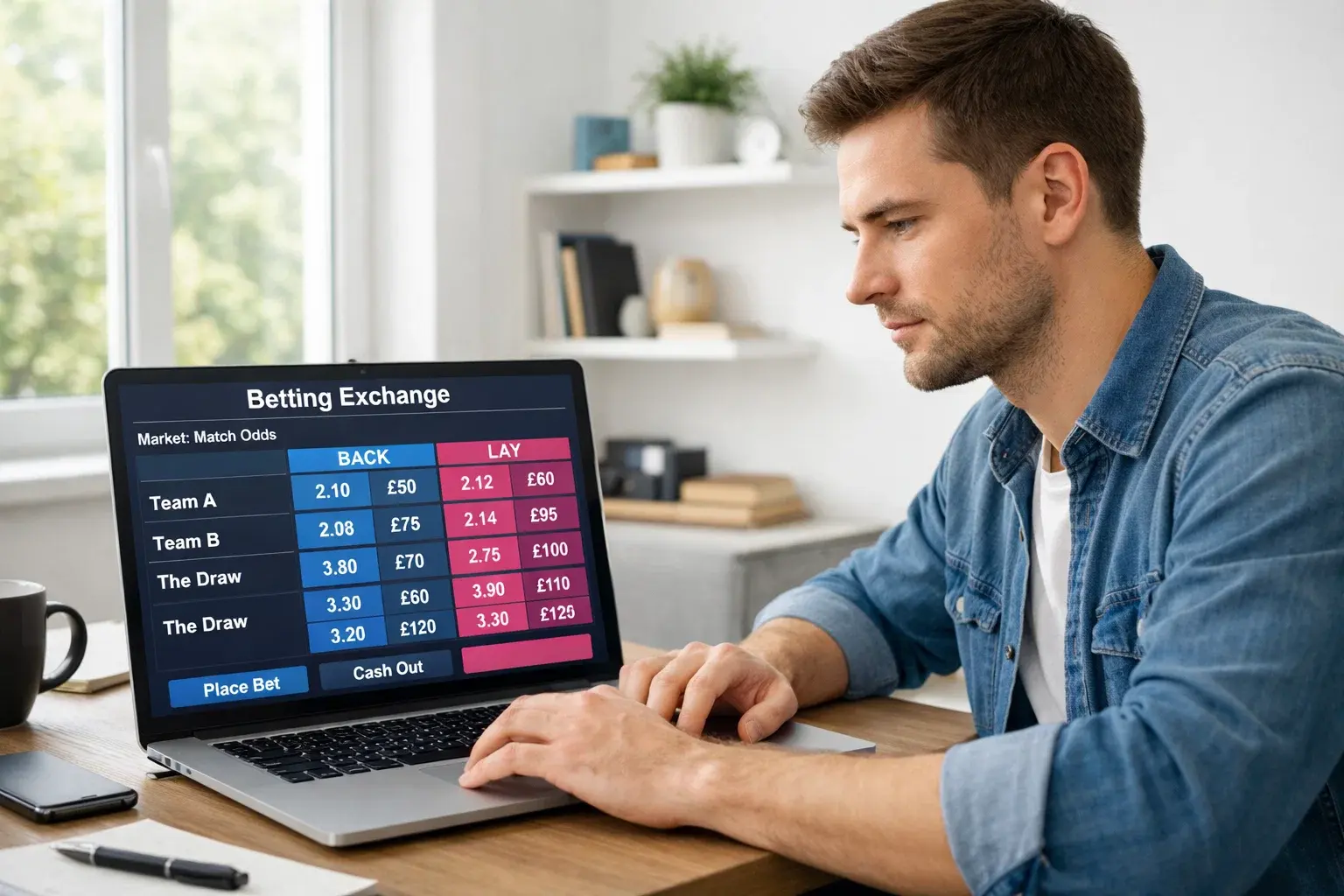
You bet against other punters. When you back Manchester United at 2.50 on Betfair, another user is laying that bet — they’re betting United won’t win. The exchange simply matches these opposing positions.
No margin is built into odds. Exchange prices reflect genuine market supply and demand rather than bookmaker-inflated odds. Prices typically represent close to true probability.
Commission replaces margin. Exchanges charge commission on net winnings from each market, typically 2-5% depending on the platform. Smarkets charges 2%; Betfair’s standard rate is 5% (with discounts for active users).
You can back or lay. Unlike bookmakers where you can only back outcomes, exchanges allow laying — betting against something happening. This opens strategies impossible at traditional bookmakers.
You can set your own odds. Rather than accepting available prices, you can request odds and wait for someone to match. This flexibility enables capturing value that passive acceptance doesn’t.
Liquidity determines availability. Your bet needs someone to take the opposite side. Major football matches have deep liquidity (millions matched on Premier League games); lower league or obscure markets may have limited availability.
Winners aren’t restricted. Exchanges don’t limit winning accounts because they profit from commission regardless of who wins. All winning bettors are welcome.
Odds Comparison: Where You Get Better Prices
Exchange odds typically beat bookmaker prices due to the absence of built-in margin.
On average, exchange odds are 2-5% better than typical bookmaker odds on the same market. Over hundreds of bets, this difference compounds significantly.
Example comparison:
Manchester City vs Chelsea match winner:
- Bookmaker: City 1.65, Draw 4.00, Chelsea 5.00
- Exchange: City 1.72, Draw 4.20, Chelsea 5.40
The exchange prices are better across all outcomes. A £100 winning back bet on City returns £172 on the exchange versus £165 at the bookmaker — £7 difference from a single bet.
Commission affects net returns. At 5% commission, your £72 exchange profit reduces to £68.40 after commission — still better than the bookmaker’s £65, but the gap narrows. Lower commission exchanges (Smarkets at 2%) widen the advantage further.
Price comparison tools help identify when bookmaker prices exceed exchange odds. Odds comparison sites highlight these opportunities instantly.
Lay Betting: The Exchange Exclusive
The ability to lay outcomes represents the most significant functional difference between platforms.
Laying means betting against. When you lay Liverpool at 2.00 for £50, you’re betting Liverpool won’t win. If Liverpool draws or loses, you win the backer’s stake (£50). If Liverpool wins, you pay the backer’s winnings (£50 at 2.00 = £50 profit, so your liability is £50).
Liability matters. Laying creates liability — the amount you’d lose if the selection wins. Liability = (Odds – 1) × Stake. Laying at 2.00 for £50 creates £50 liability; laying at 5.00 for £50 creates £200 liability.
Lay betting enables strategies including:
- Backing at bookmaker, laying on exchange (matched betting for promotions)
- Trading positions in-play as odds move
- Opposing selections you believe overvalued
- Creating dutch-style positions across multiple outcomes
Bookmakers don’t allow laying. This fundamental restriction limits strategic options significantly compared to exchanges.
Trading: Active Position Management
Exchanges enable trading approaches impossible at bookmakers.
Back high, lay low (or vice versa) locks in profit regardless of outcome. If you back a team at 3.00 and their odds shorten to 2.50, laying at 2.50 guarantees profit whether they win or not.
In-play trading exploits price movements during matches. Back a team pre-match, lay at shorter odds after they score, and lock in profit before the match ends.
Position management allows adjusting exposure throughout events rather than committing to fixed positions until final result.
Cash out comparison illustrates the trading advantage. Bookmaker cash out offers typically worse value than equivalent exchange trades. The flexibility to close positions at true market prices rather than bookmaker-offered rates increases profitability.
Account Treatment: Winners Welcome vs Restricted
Perhaps the most significant practical difference concerns how platforms treat successful bettors.
Bookmakers restrict winners systematically. Accounts showing consistent profit face stake limitations, reduced maximum bets, or complete closure. Profitable betting inevitably leads to restrictions at traditional bookmakers.
Exchanges welcome all winners. Since exchanges profit from commission regardless of who wins, there’s no incentive to restrict successful accounts. Your winnings come from other users, not the exchange itself.
Premium charges exist on Betfair. Highly successful Betfair users (those winning above certain thresholds) face premium charges that reduce the benefit of commission discounts. However, this affects only consistently profitable users at high volumes.
Long-term viability differs. Serious bettors seeking long-term profitability often find exchanges necessary after bookmaker restrictions accumulate.
When to Use Each Platform
Different betting approaches suit different platforms.
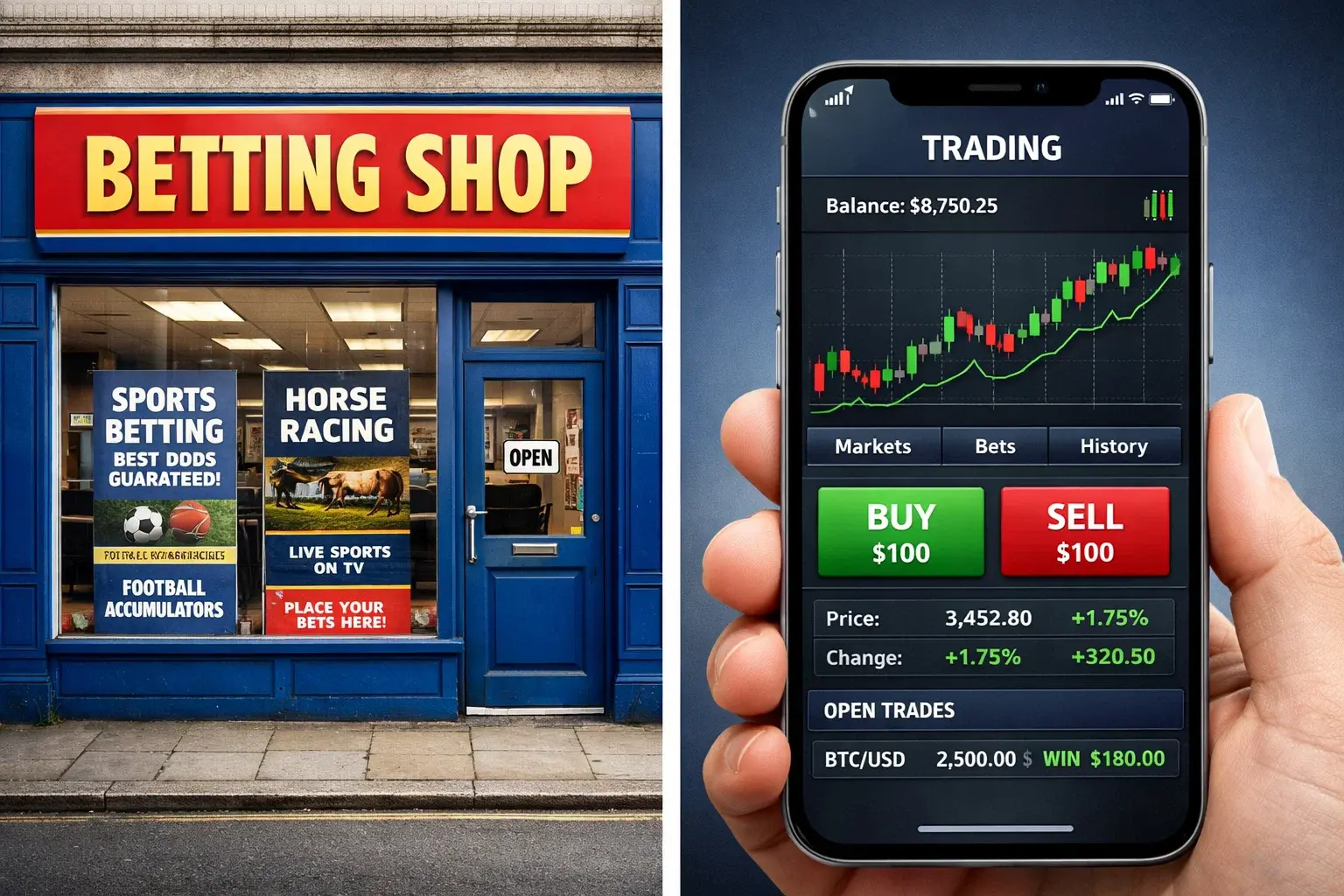
Use bookmakers when:
- You want simplicity without learning new mechanics
- Promotional offers provide genuine value (free bets, enhanced odds)
- Markets you want aren’t liquid on exchanges
- You’re betting casually without concern for long-term profitability
- Specific features (bet builders, same-game multis) are unavailable on exchanges
Use exchanges when:
- You seek best available prices consistently
- You want to trade or adjust positions actively
- You plan to bet seriously long-term and want to avoid restrictions
- Lay betting strategies suit your approach
- In-play trading forms part of your methodology
Use both strategically. Many experienced bettors maintain both bookmaker and exchange accounts, using bookmakers for promotions and specific markets while relying on exchanges for core betting activity.
Liquidity Considerations
Exchange betting requires sufficient liquidity — money available to match your bets.
Major football has excellent liquidity. Premier League, Champions League, and major European leagues see millions matched per match on Betfair. Getting bets matched at displayed odds is rarely problematic.
Lower leagues have limited liquidity. League Two, National League, and obscure competitions may have only hundreds or low thousands matched. Large stakes may not get fully matched, or only at worse odds.
Live liquidity varies. In-play markets can have deep liquidity on major matches but may become thin on less-followed games, limiting trading strategies.
Liquidity affects strategy viability. Approaches relying on quick execution at specific prices require sufficient liquidity; lower-liquidity markets suit patient position-building rather than rapid trading.
Making the Choice
Your optimal platform depends on betting style, volume, and goals.
Casual recreational betting suits bookmakers’ simplicity and promotional value. The learning curve and liquidity considerations of exchanges add unnecessary complexity for occasional bettors primarily seeking entertainment.
Serious profit-focused betting benefits from exchanges’ better odds, lay capabilities, and winner-friendly policies. The 2-5% odds improvement compounds significantly over thousands of bets; avoiding account restrictions ensures long-term viability.
Hybrid approaches often prove optimal. Exploit bookmaker promotions while they last; use exchanges for core betting and when restrictions accumulate. The platforms complement rather than replace each other for sophisticated bettors.
Explore more resources in our articles directory.
Using exchanges opens up advanced trading opportunities, such as the lay the draw strategy.
